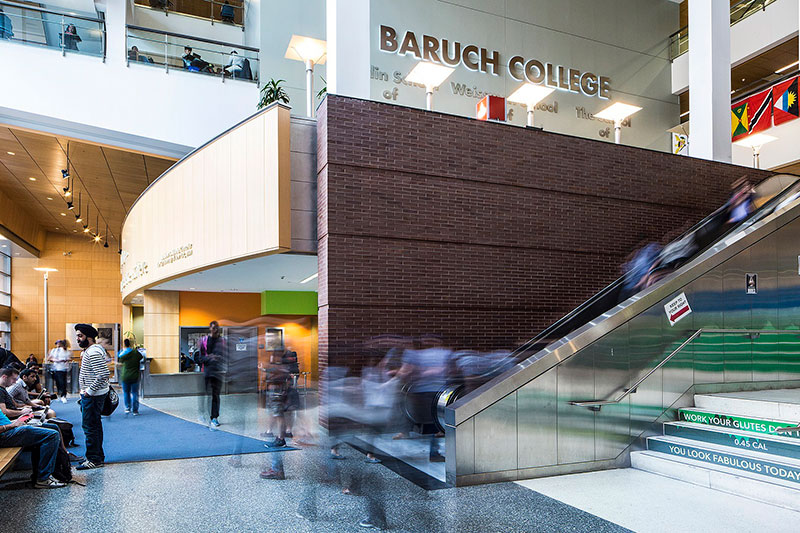
Baruch College was named after financier Bernard M. Baruch in 1953, and all these years later, it still has money on its mind. More than half of Baruch’s nearly 17,000 undergrads study accountancy, finance, economics and more in the college's well-known Zicklin School of Business, which is located just a few miles from Wall Street and the headquarters of some of the most influential companies in the world.

Baruch's New York City location also helps make it one of the most ethnically diverse campuses in the country: People at Baruch speak roughly 110 different languages, and minority students make up 74% of the undergraduate student body.
Baruch is perhaps best known for the socioeconomic mobility it affords graduates. About half of its students come from low-income backgrounds, and after graduating, Baruch grads boast median early-career earnings of nearly $83,000 — well above the national median of Money’s list. And while the Manhattan campus is dominated by commuters, Baruch still offers traditional student activities, including a campus newspaper called The Ticker, a literary journal, an active student government, 13 Division III sports teams and student groups that fit every interest, from anime and chess to archery and books.