Thanks to an open curriculum, the roughly 2,000 students at Hamilton College — all of whom live on the hilltop campus in Clinton, New York — aren't bound by a strict track of courses and prerequisites. They’re able to study what interests them individually, and nearly 70% graduate with two majors or a major and a minor.

That doesn't mean there aren't specific requirements to earn a degree in one of the more than 40 majors (referred to as “concentrations”) offered at Hamilton, though. The college emphasizes strong critical thinking and communication skills, so all students have to complete three writing courses. Students also work with advisers to develop personal education goals, a task made possible by the college's low 9:1 student-to-faculty.
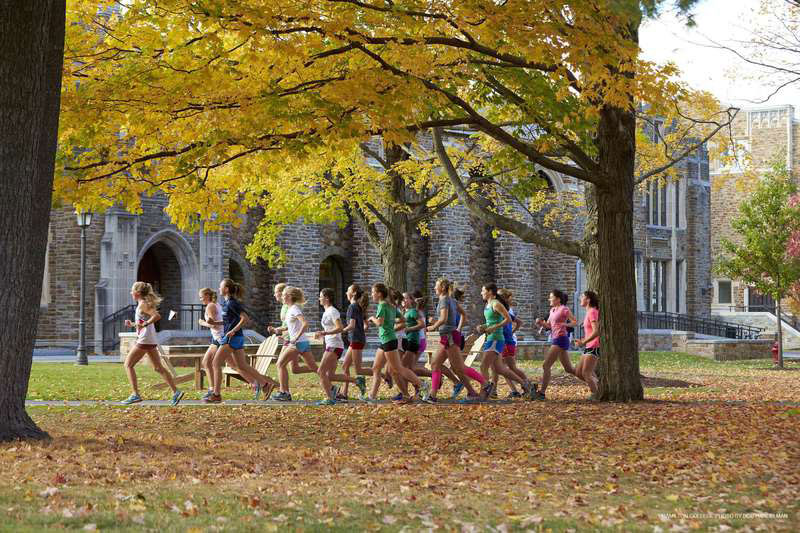
Students can participate in more than 150 student groups, including ones focused on rocket-making, thrifting, Harry Potter and more. Every spring, students participate alone or on relay teams at HamTrek, a triathlon that calls for swimming 21 lengths in the pool, biking nine miles and running five kilometers.
The college encourages students to spend at least one semester off campus, and about two-thirds of students do so through study abroad programs or internships. Hamilton is one of a limited number of colleges that pledge to meet all of a student's demonstrated financial need.