
What Jim Cramer’s Investing Misses Can Teach You
Money is not a client of any investment adviser featured on this page. The information provided on this page is for educational purposes only and is not intended as investment advice. Money does not offer advisory services.
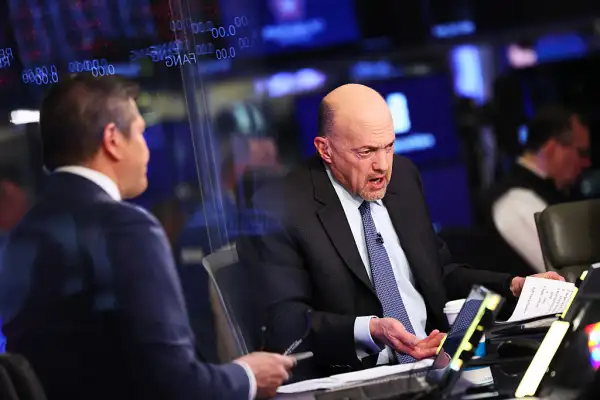
Jim Cramer, host of CNBC's "Mad Money," has long offered investors buy and sell recommendations. And while he’s identified winners, he implements an active investing approach — an approach that probably doesn’t make sense for most investors.
That’s because even professional stock pickers have trouble beating the market. Just around 12% of U.S. large-cap active funds outperformed the S&P 500 over the last 15 years, according to data from S&P Global. Here are three lessons you can learn from Cramer’s investing misses.
Must Read
1. Beware the hype
Cramer often recommends buying stocks that he says have momentum from retail investor excitement, and has also recommended selling stocks when that excitement seems to be fading. However, that can mean buying stocks when their price is already high, and selling just before the price increases. For example, Cramer told investors to sell artificial intelligence infrastructure stock IREN in mid-December after it lost more than half of its value from its all-time high. The stock then surged, gaining around 70% by the end of January.
For most investors, it doesn’t make sense to pour money into stocks just because they are rallying, or rush for the exits just because a stock had a poor month. Experts tend to recommend focusing on fundamentals and gradually accumulate winners with a dollar-cost averaging strategy, which entails buying into the market with a set amount of money at regular intervals. That way, you can capitalize on market downturns and continue to build your position during rallies.
Gold Investor Kit Offer: Sign up with American Hartford Gold today and get a free investor kit, plus receive up to $20,000 in free silver on qualifying purchases
2. Diversification is key
Cramer’s blunders highlight the risk of following investing gurus and leaning heavily into individual stocks. While picking stocks can lead to higher returns than the S&P 500, it is hard to achieve that goal. Professionals regularly follow financial markets and search for opportunities, and even they have trouble beating the market.
Diversifying across multiple assets and sectors minimizes risk and makes your nest egg less reliant on a single stock’s performance. Index fund investing is a simple way to diversify, since these funds are baskets of securities that offer you exposure to hundreds of even thousands of stocks.
Free Trade: Check out Robinhood's online trading platform and get the first trade on them
3. Your time horizon should dictate your strategy
Cramer’s buy and sell recommendations often gravitate toward how stocks will perform in the short term. However, investors should base their strategy on their risk tolerance, goals and time horizon.
Thinking in years instead of quarters can help investors discover long-term growth opportunities that are impossible to ignore. They can also construct portfolios with the right risk level. Young investors with decades until retirement may feel comfortable putting all of their money into growth stocks and funds, but retirees are more likely to want exposure to lower-risk assets such as bonds and certificates of deposit (CDs).
Your time horizon is a critical part of portfolio construction. Knowing how soon you will have to tap into your portfolio to cover living expenses will influence what types of investments you prioritize. Cramer often discusses high-risk growth stocks that aren’t suitable for retirees’ portfolios.
Extra Money: Get up to $1,000 in stock when you fund a new active SoFi invest account