
5 Ways a Government Shutdown May Affect Your Money

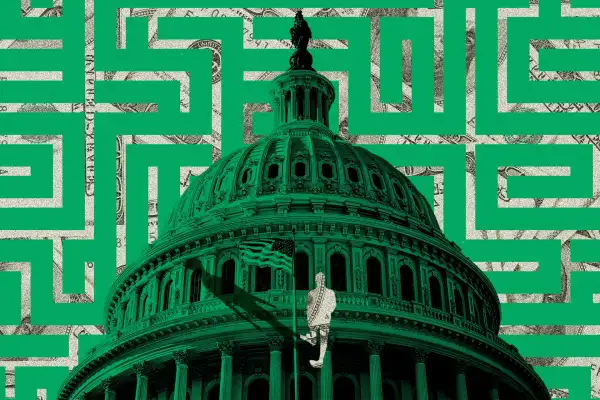
Fewer than three months after the longest federal government shutdown in U.S. history, lawmakers are gridlocked again ahead of a Friday funding deadline to keep the government fully operational.
Six of the 12 annual spending packages that fund federal agencies for the fiscal year have already been passed by Congress and signed into law by President Donald Trump. However, the remaining six bills are being fiercely debated in the U.S. Senate and are at risk of missing the Jan. 30 deadline, which would send the U.S. government into another partial shutdown.
The stalled bills include appropriations for the departments of the Treasury, Health & Human Services, Education, Labor, State, War (formerly known as Defense), Homeland Security, Transportation, Housing & Urban Development and other agencies.

The debate hinges on funding for the Department of Homeland Security, which includes U.S. Customs and Border Protection and U.S. Immigration and Customs Enforcement, known as ICE. Following the ICE killing of Alex Pretti, 37, in Minnesota on Saturday, the appropriations bill stalled, with many lawmakers refusing to vote for any ICE funding.
"I hate shutdowns," Sen. Angus King, I-Maine, said during a CBS Face the Nation interview on Sunday. "But I can't vote for a bill that includes ICE funding under these circumstances."
Because funding for the Department of Homeland Security is currently packaged together with several other departments, the debate over ICE funding could plunge the U.S. into another partial shutdown.
“Any shutdown is a bad shutdown,” Andrew Lautz, a director of federal tax policy at the Bipartisan Policy Center, previously told Money. “Even if it’s a one-day shutdown.”
While some agencies are already funded, many others — like the departments of the Treasury and Education — administer crucial programs that affect the finances of everyday Americans.
Here are several ways a shutdown could affect your money.
1. Federal workers are furloughed and paid late
Perhaps the most directly impacted group of people during a government shutdown is federal workers and contractors who have nothing to do with the political negotiations over spending. (Lawmakers still get paid during government shutdowns.)
According to the Department of Labor, the federal government employs nearly 3 million non-military workers. On top of that are “hundreds of thousands of federal contractors whose businesses in large part depend on the federal government,” Lautz says. Many of these workers are once again at risk of being either furloughed or asked to show up to work without on-time pay.
A 2019 law guarantees back pay for these workers when the shutdown ends, but they are forced to make do in the meantime with no clear timeline for their next payday.
“One missed paycheck can be a missed payment on your car, a missed payment on your mortgage,” Lautz says. “It can mean going into credit card debt.”
Given the size of the federal workforce, Lautz also notes that the missed paychecks could also have a ripple effect on the local economies with a high concentration of federal workers, given that they will likely have to curtail spending throughout the shutdown.
A recent report from the nonpartisan Congressional Budget Office estimated that a partial government shutdown could result in up to $400 million of lost compensation per day for federal workers.
2. The IRS would suffer as tax season ramps up
Tax season officially launched Monday, and the Trump administration has been touting potentially "gigantic" refunds this year. According to the Tax Foundation, refunds could be between $300 and $1,000 larger than normal due to a slew of tax code changes from President Donald Trump’s One Big Beautiful Bill Act.
Because the Treasury Department is awaiting appropriations, the IRS is at risk of partially closing at a crucial time.
A shutdown right at the beginning of tax season could decimate the agency's ability to process tax returns and issue refunds in a timely manner. The IRS hasn't released new details on how many workers it would furlough during a shutdown, but the agency had to send home about half of its workforce during the last one.
3. Travelers could see flight delays
For travelers, the good news is that air traffic control and airport security continue during the shutdown, so wide-scale cancellations and delays should largely be avoided.
“But that’s not to say there aren’t potential interruptions,” Lautz says.
The departments of Transportation and Homeland Security, which oversees the Transportation Security Administration, or TSA, are among those requiring appropriations. TSA agents and other airport workers are generally deemed essential and asked to show up — but without pay. Many may decide not to. During the recent shutdown, several airports reported major back-ups as federal workers called off.
National parks and museums would not be affected by a potential shutdown this time because the Department of the Interior has been funded.
4. Government benefits might be disrupted (but not Social Security payments)
Many federal benefits programs are affected during a government shutdown, but Lautz wants to make one thing clear: “Social Security benefits will continue to flow.”
However, the actual administration of the program, including customer service and verification of eligibility, could be disrupted. The Social Security Administration's latest shutdown plan says about 45,000 employees will stay on while 6,200 are furloughed.
Social Security benefits are one example of “mandatory” government spending, meaning the government is obligated to pay out these benefits even during a shutdown. Medicare and Medicaid benefits are also mandatory. However, the agency's shutdown plan says benefits verification and Medicare card replacement services may be put on hold.
Temporary Assistance to Needy Families (aka welfare) and Section 8 housing assistance could also be affected since the administering departments require funding. SNAP benefits, which are mandatory spending via the Agriculture Department, are funded and are not likely to experience major delays.
5. The release of economic data may be held up
Among the long list of agencies that are hobbled by a government shutdown are those that monitor and report on the economy, namely the Department of Labor’s Bureau of Labor Statistics.
This agency regularly releases data related to jobs, unemployment, inflation and more. Economists, businesspeople and policymakers — especially the Federal Reserve — rely heavily on this data to make decisions. The previous shutdown wrought havoc on the agency's data collection efforts — distorting some data releases while canceling others entirely. This spurred volatility in the U.S. stock market, as investors were forced to make decisions without key information.
Lautz says he can't predict how markets will react, of course, but one thing's for certain: "Markets do not like uncertainty."
Reduce payments and make debt manageable with a Debt Relief program




More from Money:
Education Department Delays Garnishing Pay From Student Loan Borrowers in Default
Companies Are Suing Trump for Tariff Refunds. Does That Mean Lower Prices for You?
How to Claim Your $20 Credit After Last Week's Verizon Outage