Is This Time Different? The Macro Signals Driving Renewed Gold Interest

- Gold Prices Today: March 26, 2026
- War, Market Volatility and $100 Oil: Is Now the Right Time to Buy Energy Stocks and ETFs?
- War in Iran Sends Gold and Oil Prices Soaring. Gas Could Be Next
- Ignore the 4% Rule: This Is the Best Retirement Investing Strategy for Most Americans
- Gold Isn't the Only Metal Soaring in Price in 2026
Money is not a client of any investment adviser featured on this page. The information provided on this page is for educational purposes only and is not intended as investment advice. Money does not offer advisory services.
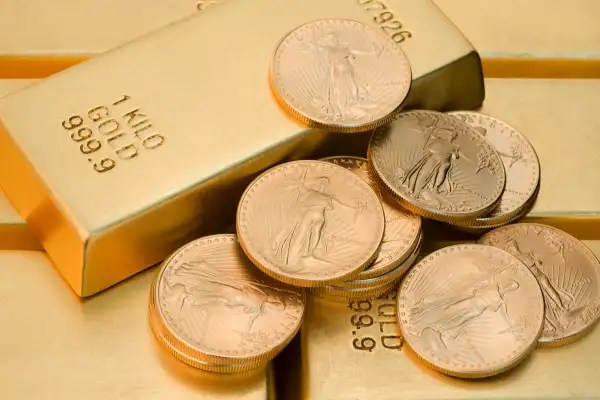


Gold has surged by around 50% over the past year, leaving the S&P 500’s gain of 14.50% over the same period in the rearview mirror. The precious metal’s gains have attracted much attention as investors continue to deal with stock market uncertainty.
Much of that has to do with gold's historical track record. While companies come and go, the yellow metal has endured the test of time. It has been a medium of exchange for thousands of years, dating back to Ancient Egypt.
Its intrinsic value and real-world applications make it an essential resource in any economic cycle. That’s why uncertainty around inflation and oil has caused gold’s value to spike. These two key macro signals are playing a role in gold's recent price action, and a look at history can verify if gold’s rally will last.

The macro signals that drive gold
Economic uncertainty drives gold prices higher because people turn to safe-haven assets during times of financial and market strain. Part of the reason is that this uncertainty can reduce the value of fiat currencies. If countries go to war, they often have to spend and print more money to support those ambitions. Any slowdown in supply chains can increase the prices of goods and services, in turn leading to inflation, and inflation is a major driver of gold prices.
Investors who are worried about the long-term viability of the U.S. dollar and other fiat currencies often flock to gold. That’s because gold is one of the few assets that actually performs well during periods of high inflation. Stocks struggle in this same environment because high inflation reduces consumer spending and can adversely impact corporate profits.
Inflation also forces businesses to spend more money on input costs, such as airlines spending more money on jet fuel when there are oil shortages or spikes in crude prices. These companies must decide between narrowing their profit margins or raising prices. The former hurts the bottom line, while the latter reduces demand.
However, high inflation doesn’t guarantee higher gold prices. The precious metal only gained 1% in 2022 despite inflation reaching 40-year highs. That’s because the Federal Reserve aggressively ramped up interest rates to combat inflation. However, that 1% gain was vastly superior to the S&P 500’s 19% loss and the Nasdaq Composite’s 33% decline the same year.
Investors tend to focus more on gold than stocks during economic downturns and periods with high inflation. Higher interest rates hurt stocks and gold, since high rates increase the cost of borrowing money despite reducing inflation.
Will gold rally because of the war in Iran and the Strait Of Hormuz blockade?
The Strait of Hormuz blockade is the vital economic item that can influence the prices for products, services, and assets in the upcoming months. It will lead to higher inflation — a major catalyst for gold — since higher oil prices translate into higher shipping costs, which companies often offset by raising product prices.
While the U.S. dollar normally strengthens during economic uncertainty, that may change if Iran only allows oil through the Strait if it's paid for in Chinese Yuan. This scenario has gained traction and can put more pressure on the world's most recognized currency. That event should boost gold prices, but the risk of higher interest rates is a major concern.
During the oil crises of the 1970s and early 1980s, interest rates almost reached 20%. Those interest rates could decimate inflation and result in gold losing value, but high rates wouldn’t do much good for the stock market either. Gold surged by 73% from 1937 to 1975 amid stagflation, but it lost roughly 10% per year from 1980 to 1984 amid oppressive interest rates and easing inflation.
The S&P 500 performed poorly for most of 1973 to 1975 but thrived from 1980 to 1984, showing the lack of correlation between the stock market and precious metals. This precedent suggests gold can rally amid higher oil prices since that will cause inflation, but any aggressive rate hiking can parry those gains.
Bank liquidations can lead to a short-term drop in gold prices
Debt is a major economic force that props up asset prices. The ability to take out a 30-year mortgage is the primary reason houses are so expensive, and margin is one of the levers that pushes stocks and gold to all-time highs.
Margin debt reached $1.28 trillion in January, which was the eighth consecutive month that margin debt hit a new record. It's also the ninth straight monthly increase. Major economic contractions cause asset prices to plummet, and that will force borrowers who are deep in margin to aggressively sell investments, including gold.
This phenomenon was on full display during the 2008 Financial Crisis. Gold initially dropped by 28%, even though an economic recession is normally the perfect opportunity to buy gold. Margin calls resulted in a lot of forced sales, but once the margin dust cleared, gold quickly surged by 163% within the next three years, comfortably beating the S&P 500 over that period.
The reliance on margin debt can cause some assets to behave irrationally in the short run. Market crashes stir up panic, especially for investors who are deep into debt on their positions. Future rate hikes make it even more expensive to borrow margin and can cause additional selling. That’s part of the reason gold doesn’t perform well during periods with interest rate hikes.
These types of liquidations shouldn't intimidate investors with long-term horizons and zero margin. They present buying opportunities, and market turmoil during these times can cause people to flock to safe-haven assets like gold, especially in accounts like gold IRAs.
Gold has multiple tailwinds that should continue to grow, but investors should watch out for interest rate hikes to combat inflation and the prospect of short-term liquidity crunches fueling margin calls.
Stone-hard wealth protection