
If Your Savings Account Still Pays Almost Nothing, You’re Giving the Bank Free Money
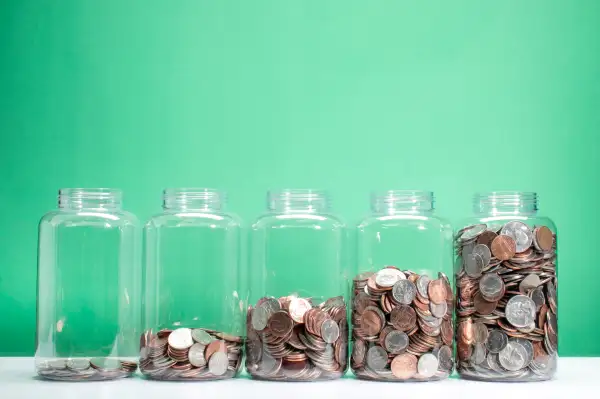
Building your savings and keeping your spending under control is the foundation of a strong financial future. But if you cash in a low-yield savings account, you’re leaving money on the table.
While it’s important to invest in assets that can generate long-term returns such as stocks, you can also grow your savings with high-yield savings accounts (HYSAs), many of which are paying more than 4% annual percentage yields (APYs).
Must Read
Why your bank may still be paying you almost nothing
Not all savings accounts are created equal. They all let you store money, and most accounts are Federal Deposit Insurance Corporation (FDIC) or National Credit Union Administration (NCUA)-insured, depending on whether you are doing business with a bank or a credit union. However, big banks often have little incentive to raise their APYs, since many customers will stick with their bank even if it’s not offering them the best rates. The national average savings rate on accounts was just 0.38% APY as of May, according to the FDIC. Meanwhile, recent research from Chime found that the average American has been with their bank for 17.6 years.
If you do some digging, you can find banks that have yields above 4% for their HYSAs. Even a 2% or a 3% APY will grow your wealth faster than what many traditional savings accounts offer.
Ultimately, the money you store in a low-yield savings account is free money for the bank. Financial institutions can use your deposits as a part of their broader business. They can use deposits to issue loans with higher rates than they give customers who have savings accounts.
Where People Are Earning With High-Yield Savings Accounts
How much money savers could be leaving behind
The difference between a 0.38% APY and a 4% APY may not seem consequential after a few months, but if you compound it across multiple years, the gap expands quickly. If you have a $5,000 balance in an account with a 0.38% APY, you will earn about $19 in a year. However, that same balance brings in $200 if the account has a 4% APY. Similarly, a $25,000 balance brings in $95 in a year at a 0.38% APY compared to $1,000 in a year at a 4% APY.
HYSAs aren’t set in stone. They tend to fluctuate based on when the Federal Reserve raises or cuts rates. However, a 4% APY savings account isn’t likely to drop to 0.38% APY anytime soon. Check out Money’s list of the best high-yield savings accounts to find accounts that offer more than what you’re currently earning.
What to check before switching savings accounts
Before committing to an account with a high advertised yield, assess whether the high APY applies to your entire balance or if it is limited, such as to the first $5,000 of your balance.
Yield is a major factor when choosing an account, but it’s not the only one to consider. The bank account should be FDIC- or NCUA-insured and you should check the fees. A monthly maintenance fee can undo some of the perks of a HYSA. It should also be easy to move money back to a checking account so you can spend your funds as needed.
You will often get the highest rates with online banks since they have less overhead than traditional banks. However, you should assess if an online bank has strong customer support and whether you value going to a physical branch to address issues that come up.