How Long Do You Expect to Live? Getting It Wrong Could Cost You in Retirement

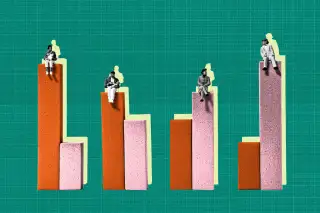
Two-thirds of Americans misjudge their life expectancy... and that blind spot could put their retirement savings at risk.
Only 33% of adults can correctly estimate how long a 65-year-old will live. Another 32% underestimate it, 13% overestimate it and 22% admit they don’t know, according to a new report from the TIAA Institute, conducted in collaboration with the Global Financial Literacy Excellence Center (GFLEC). But the reality is retirees often spend 20 to 30 years or more in retirement, and underestimating your lifespan can lead to under-saving — or worse, the risk of running out of money.
“If we underestimate our life expectancy, we are not doing the right things now,” Surya Kolluri, head of the TIAA Institute, tells Money. “It's not like we're asking anybody to spend extra money or save extra money. We’re just saying your awareness of the fact that you're going to live longer is going to make you think about your life differently.”
That misunderstanding doesn’t just reflect a knowledge gap; it shapes how folks plan for retirement. According to the report, only 48% of workers who expect to spend fewer than 10 years in retirement save regularly, compared to about 71% of those who anticipate longer retirements.
Those who expect shorter retirements also tend to save less when they do contribute. Among that group, about a quarter save 5% or less of their income, while relatively few save more than 10%.
But that gap extends beyond just savings. Workers who expect shorter retirements are also less likely to plan at all. Fewer have calculated how much they’ll need or sought professional advice. In other words, people who think retirement will be brief often prepare for it that way, even though the reality may look very different.
The retirement cost of getting life expectancy wrong
So why do so many Americans get it wrong? Part of the issue is that many people are working off the wrong assumptions about life expectancy.
The life expectancy figures most people hear — often cited by agencies like the Centers for Disease Control and Prevention, or CDC — reflect averages at birth, which include early deaths. But for someone who has already reached age 65, the expected lifespan is significantly longer. On average, a 65-year-old man today will live to about 82 or 83, while a woman can expect to live to roughly 85, according to the Social Security Administration's life tables.
The number most people have in mind is overall life expectancy, which includes the entire population, explains Kolluri. But if you’ve already reached age 65, that number is higher by definition.
People also tend to rely on personal experience rather than broader data. Folks tend to think about their own family — their parents or grandparents — but we’re not our grandparents, Kolluri explains. "Our education might be different. The zip code we're living in might be different. The state of medical technology might be different," he adds.
The misunderstanding also isn’t evenly distributed across age groups. “Those who are closer to retirement tend to have a sharper appreciation for how long they need to plan for, while for younger Americans it can feel more abstract,” Kolluri says.
People in their 40s and early 50s, in particular, may be juggling competing financial priorities, such as raising children, paying for college and caring for aging parents. As a result, thinking about how long retirement will last can feel like a distant priority. “They're totally focused on dealing with what’s happening now in their lives. For them, how long they’ll live in retirement can feel like a distant question,” Kolluri says.
The report also finds a gap in how men and women perceive longevity. Men, for example, are more likely to underestimate life expectancy than women. When asked how long a 65-year-old lives on average, 40% of men underestimated the answer compared to 31% of women. Kolluri says that may be because women are more often involved in caregiving and medical decision-making, giving them a closer view of how long people tend to live.
Encouragingly, this is a fixable problem.
People who spend time thinking about longevity tend to have better saving habits, plan more for how much they’ll need and feel more confident about retirement, Kolluri explains.
One simple way to adjust is to assume your retirement may last longer than you expect. Start by building in a buffer. For example, add an extra decade to your planning horizon so that you can better account for longevity risk.
“If we can help people envision their lifespan — like adding 10 years to what they’re planning — that will allow them to recalibrate,” says Kolluri.
More from Money:
The Retirement Mistake Many 60-Year-Olds Don’t Realize They’re Making
It Might Be Time to Ditch These Two Retirement 'Rules'
85% of Gen X and Boomers Regret This Retirement Savings Mistake