Pennies Are Coming Back for America's 250th Anniversary — Sort of

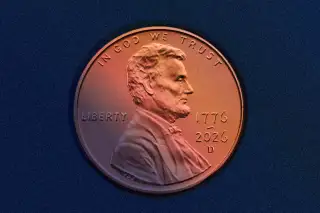
There's nothing America loves more than a comeback. The penny might be extinct, but the U.S. Mint is bringing it back for a victory lap as a supporting actor in a cast of special coins minted to commemorate the 250th year since the nation’s founding.
The U.S. Treasury Department officially ordered the U.S. Mint to stop producing pennies in 2025, and the last batch rolled off the presses last year. The demise of the penny was a long time coming; previous Treasury secretaries had complained about the economic inefficiency of producing the 1-cent coin, with each costing nearly 4 cents to mint.
Must Read
While pennies remain legal tender for now, many retailers have taken to rounding cash transactions up or down to the nearest nickel, especially as pennies have become scarce. This is what other countries that have gotten rid of their lowest-denomination coins have done. And the nickel is probably safe for now. Experts told Money earlier that they don't expect the 5-cent piece to go anywhere in the foreseeable future.
But now, the penny is making a limited-edition return to help the U.S. celebrate its 250th anniversary. The U.S. Mint is rolling out coinage — which also includes nickels, dimes, quarters and half-dollars — that commemorate this year's 250th celebration, much as it did for the U.S. bicentennial in 1976.
What makes these new coins different? Instead of having a single date denoting their production year, these coins feature a pair of dates commemorating the semiquincentennial: 1776 and 2026.
Aside from this change, the dual-date penny features the typical design: Abraham Lincoln’s profile on the front and the Union Shield on the back. The semiquincentennial nickel also has no differences aside from the additional year, but the dime, quarter and half-dollar are all getting special redesigns to mark the anniversary.
Where to find these special coins
The semiquincentennial nickel, dime, quarter and half-dollar are all being distributed to banks. If you're hoping to spot these coins in the wild, their regular-circulation status means that they're likely to be found in all the usual places, from cash registers to change purses to cupholders.
Unfortunately, these coins aren't likely to be worth a proverbial mint, according to John Brush, president and owner of David Lawrence Rare Coins and president of the Professional Numismatists Guild.
"Due to the large production numbers of the semiquincentennial coins, the average coin found in circulation is not likely to be worth anything over their face value," Brush tells Money via email.
Where People Are Buying Gold Right Now
For collectors, a coin’s value is heavily influenced by its rarity and its condition. The large number of dual-date coins the U.S. Mint intends to distribute, plus the nicks and scratches they sustain from getting banged around in cash register drawers, parking meters, pockets and the like, makes them unlikely to be worth a premium.
You won't wind up with dual-date pennies in your coin jar, though.
If you want to get your hands on one of these copper-colored commemorative coins, you’ll have to pay a pretty penny: You can get these pennies only via the U.S. Mint, which offers them for collectors on its website. The dual-year pennies are part of semiquincentennial proof sets — they're not available individually. Sets of uncirculated coins that include the dual-date penny will cost $107 when they’re released this fall. A silver proof set will be available starting this month for a cool $245.
Is the premium worth it? History offers a good guide. For the nation's 200th anniversary, the U.S. Mint issued special coinage to commemorate the event. "We would expect these to be valued similarly to the bicentennial issues in 1976, which have long been popular with collectors," Brush says.
But popularity among coin enthusiasts doesn't necessarily translate into a windfall, Brush notes. Although he anticipates demand for the 2026 silver proof coins to spike in the short term, this is unlikely to be sustained, he predicts. "I do expect they will adjust back to closer to their issue price within a few months."
The bicentennial coinage included dual-date three-piece silver proof sets the U.S. Mint sold for $12. Today, those sets, which have a face value of $1.75, can be found for roughly $45 online. That’s not a significant premium, given that the roughly half-ounce of silver they contain is worth about $35 at current spot metal prices.
“Unfortunately, they have generally proven to be very poor investments, though they are still interesting for collectors," Brush says. And for fans of the humble 1-cent coin, these semiquincentennial sets could be the last chance ever to obtain a shiny new penny.