The Salary Needed to Afford a Home Has Spiked 70% Since 2019

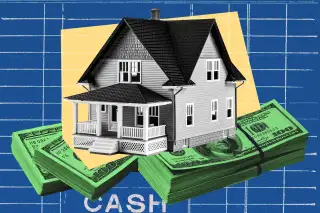
In pre-pandemic times, a salary of $67,000 could afford a modest home in most areas of the country. Not anymore.
Americans now need to earn at least $114,000 to be able to buy the typical house, according to a report from Realtor.com released Thursday, marking an increase of 70% in just six years.
“Compared to 2019, the required income has jumped by nearly $47,000,” the report’s authors wrote, “largely driven by home price appreciation and higher mortgage rates.”
Build equity with your own home instead of paying rent to a landlord
Unlock your interest rate now
Your Information
Not sure which loan type to choose? Go with a 30 Year Fixed Rate Loan, 90%+ of Americans do.
You can enter the mortgage loan amount, or the total home price if you have a downpayment.
Your Estimated Rate
Estimated interest rate*
Money’s Methodology
*Based on the U.S. average rate for consumers with an Exceptional Fico score (780+) getting a conventional loan, no points, and a 20% down payment. Actual rates may vary. Click "View Rates" to contact Mortgage Research Center Mortgage Rates (NMLS #1907) for a more accurate quote.
For reference, the median salary in the U.S. for full-time workers is roughly $62,000. Such a salary would not be able to afford a home in any of the cities included in Realtor.com’s analysis.
The most affordable city on the list, Pittsburgh, came close. There, median home prices are about $244,000 and require a salary of $64,000.
Realtor.com’s calculations were based on home prices in 50 of the largest metropolitan areas in the U.S., assuming a 30-year fixed mortgage rate, a 20% down payment and no more than 30% of income going toward housing costs. (Given that about half of all new mortgages require private mortgage insurance because the borrower could not make a 20% down payment, that may be a generous assumption.)
According to the Department of Housing and Urban Development, people who spend more than 30% of their income on housing are considered “cost burdened.” About 42 million households — or 1 in 3 families — meet that definition, federal data shows.
By now, Americans are well aware of how pandemic-induced inflation has been eating away at their standard of living. But the Realtor.com report puts the housing affordability crisis in stark new light by focusing on what it realistically takes to keep up with housing inflation of 30% over the past six years.
Where salary requirements for homeownership are the highest
In 23 cities, you'll need more than a $114,000 salary to buy a home these days.
The required salaries above that benchmark range from $116,000 in the Charlotte, North Carolina, area all the way up to $370,000 for the typical home in San Jose, California.
Here’s a closer look at the 10 most expensive metros in the country.
- San Jose, California: The median listing price is $1.4 million, requiring a $370,000 salary.
- Los Angeles, California: The median listing price is $1.2 million, requiring a $316,000 salary.
- San Francisco, California: The median listing price is $995,000, requiring a $263,000 salary.
- San Diego, California: The median listing price is $980,000, requiring a $259,000 salary.
- Boston, Massachusetts: The median listing price is $878,000, requiring a $232,000 salary.
- New York City, New York: The median listing price is $789,000, requiring a $209,000 salary.
- Seattle, Washington: The median listing price is $782,000, requiring a $207,000 salary.
- Sacramento, California: The median listing price is $634,000, requiring a $167,000 salary.
- Washington, D.C.: The median listing price is $623,000, requiring a $165,000 salary.
- Portland, Oregon: The median listing price is $615,000, requiring a $163,000 salary.
On the flip side, Pittsburgh, as mentioned above, was the most affordable metropolitan area. Detroit was a close second. The salary needed for a typical home in Motown, listed at $254,000, is $67,000.
More from Money:
8 Best Mortgage Lenders of 2025
Top 10 U.S. Cities Where Home Sellers Are Offering Perks to Sweeten the Deal
On TikTok, Preparing for a Recession Is a Vibe