
Tax Season Officially Opens Today. Here's What to Know About Claiming Your 2025 Refund


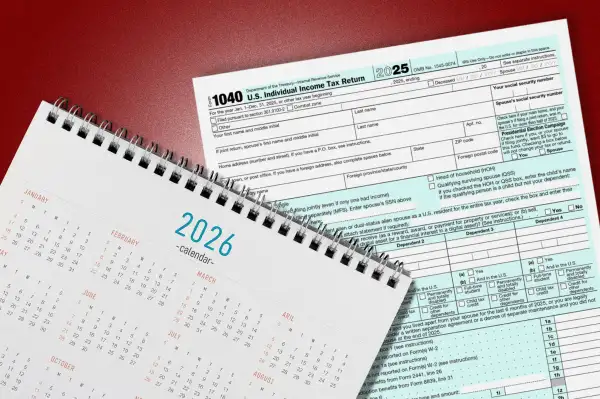
Taxes aren't due for another few months, but if you're itching to get your hands on your refund, we have good news: The IRS began accepting 2025 tax returns on Monday. Even if you don't plan to file your taxes just yet — given that they're not due until April 15 — you might want to submit your return a little sooner than usual this year.
A quick reminder, since the dates can be confusing: Jan. 26 is the first day of the 2026 tax season for tax year 2025. That is, you'll be paying taxes — or getting a refund on taxes you already paid — on money earned from Jan. 1 to Dec. 31 last year.
Over 60% of taxpayers received a refund in 2025, and there could be bigger refunds coming for the roughly 164 million Americans expected to file tax returns this year. In a news release earlier this month, the IRS said the One Big Beautiful Bill Act, or OBBBA, passed last year by Congress could "help lower tax bills and potentially increase refund amounts" for taxpayers. According to the Tax Foundation, the OBBBA could add $1,000 to the average refund, which the IRS said was $3,167 last year.
Even if you don't itemize your taxes, you might be looking at a bigger refund this year. In its news release, the IRS highlighted a new Schedule 1-A, which taxpayers can use to claim new OBBBA deductions like the additional $6,000 deduction for seniors.

Get a head start on your taxes

Same-day filing service available
- Match with local tax experts who can do your taxes, start-to-finish
- Pay only when TurboTax is ready to file with the IRS
- 100% accurate calculations, 100% lifetime audit support
- Every return filed securely with IRS e-file
-
Free version: TurboTax Free Edition*

Three tiers of federal tax return filings, including a free version
- Accredited with the Better Business Bureau, with an A+ rating
- Paid tiers cheaper than most competitors
- 4.2 rating on Trustpilot.com

Choice of multiple plans to suit a variety of tax filing needs
- Limited time offer: take 25% off all plans
- Most-reviewed on Trustpilot in the tax prep software category
- Free simple returns — $0 federal, $0 first state
- Choice of multiple plans to suit a variety of tax filing needs
- 100% accuracy, guaranteed
- Guaranteed maximum refund
- Pay nothing out-of-pocket
- Expert phone, email and live chat support
- Self-employed and tax law change guides available
When are taxes due in 2026?
The deadline to file taxes in 2026 is April 15, but it's best not to wait until the last minute. If you're owed a refund, you'll have that cash in hand sooner; plus, if you need help, you'll be more likely to get that assistance in a timely fashion if you beat the rush.
If you need more time, you can file for an extension using IRS Form 4868, which gives you until Oct. 15 to file your return. Keep in mind, though, that this only gives you more time to file, not to pay. If you owe the IRS and don't pay by April 15, you'll still owe that money in October — plus interest and penalties.
After you file, you can track the status of your refund with the Where's My Refund? online tool or mobile app. You'll need to have on hand your Social Security or taxpayer ID number, filing status and exact amount of your refund.
When will I get my refund?
If you've typically gotten your tax refund via a paper check in the mail, heads up: Starting last fall, the IRS began phasing out paper checks, encouraging taxpayers to switch over to electronic processing.
In a news release Monday, IRS CEO Frank J. Bisignano noted that this is the 40th anniversary of electronic filing. “Just as we did back in 1986, today the IRS encourages taxpayers to speed the processing of their returns by using e-file, instead of paper," he said, adding that direct deposit is the fastest way to get your refund. (Don't have a bank account? Now might be a good time to open one. Money's roundups of the best banks and credit unions have plenty of options.)
The IRS says most refunds are issued within 21 days. The agency has an online tool taxpayers can use to check the status of their refund. Your refund status could appear as soon as 24 hours after you file your taxes, the agency says. Once the tool displays your status as "refund sent," your refund should appear in your bank account within five days, provided that you elected to receive your refund electronically. If you're waiting on a paper check, the IRS says it could take several weeks for your refund to arrive in the mail.
How to file your taxes for free this year
The IRS announced in November that it was eliminating its free Direct File program, but there are still other options available for some taxpayers to file for free starting Jan. 26.
If you're comfortable doing the math and filling everything out yourself, the IRS has free fillable forms you can access online. People who earned $89,000 or less last year can get free guided tax prep through the IRS's Free File program, which it runs in conjunction with for-profit tax prep companies.
If you don't have any earned income, you're not technically required to file a federal tax return, but tax pros advise doing so anyway so you can claim any refundable tax credits for which you're eligible.