Could Crypto Help You Buy Your Next Home?

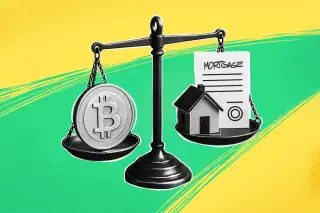
Home buyers may soon be able to use cryptocurrency as an asset on mortgage applications.
On Wednesday, Federal Housing Finance Agency, or FHFA, Director William Pulte told Fannie Mae and Freddie Mac to develop a proposal for how crypto holdings could be treated as an asset — without being converted into U.S. dollars — when assessing risk in single-family home loan applications.
This directive comes as the U.S. housing market continues to struggle with high interest rates, affordability challenges and a housing inventory that is still well below pre-pandemic levels, according to Realtor.com.
Fannie Mae and Freddie Mac are government-sponsored mortgage companies that buy loans from lenders and repackage them as securities for investors. They were taken under federal control in 2008 during the financial crisis and remain overseen by the FHFA. (However, President Donald Trump said last month that he plans to take the companies public — a move that some experts warn could be risky for the broader housing market).
Unlock the Best Interest Rate for You
Unlock your interest rate now
Your Information
Not sure which loan type to choose? Go with a 30 Year Fixed Rate Loan, 90%+ of Americans do.
You can enter the mortgage loan amount, or the total home price if you have a downpayment.
Your Estimated Rate
Estimated interest rate*
Money’s Methodology
*Based on the U.S. average rate for consumers with an Exceptional Fico score (780+) getting a conventional loan, no points, and a 20% down payment. Actual rates may vary. Click "View Rates" to contact Mortgage Research Center Mortgage Rates (NMLS #1907) for a more accurate quote.

In a post on X, Pulte said that the directive aligns with Trump’s “vision to make the United States the crypto capital of the world.” Until now, crypto hasn’t played much of a role in the typical home buying process, mainly due to its volatility and murky regulatory landscape. Still, there's growing interest in making crypto part of the home buying process. While just 1% of recent buyers actually used crypto sale proceeds for a downpayment, about 14% say they plan to in the future, according to Redfin.
“This is a big win for advocates of cryptocurrencies who want crypto to be treated the same way as other assets are,” Daryl Fairweather, chief economist at Redfin, told the Associated Press.
In the FHFA's directive to both agencies, Pulte also instructed the two companies to “consider additional risk mitigants per their own assessment, including adjustments for market volatility” — a nod to the inherent instability of crypto.
Together, Fannie Mae and Freddie Mac back more than 60% of new mortgages in the U.S., meaning any shift in how they evaluate assets could have a wide-reaching impact on home buyers. But despite the potential reach, crypto remains relatively niche. Only 17% of U.S. adults have invested, traded or used crypto, according to the Pew Research Center — a figure that has remained statistically unchanged since 2021. Still, with 14% of prospective home buyers saying they plan to use crypto sale proceeds for a down payment, even a niche asset like cryptocurrency could end up influencing mortgage markets more than its adoption rate alone might suggest.
Overall, the policy change is intended to broaden how lenders evaluate a borrower's creditworthiness. Next, Fannie Mae and Freddie Mac must each draft proposals outlining how they plan to review crypto assets, which will need to be approved by their respective boards of directors and the FHFA before any changes can take effect. A timeline hasn't been announced, but the order states that implementation should occur "as soon as reasonably practical."
More from Money:
This Home Insurance Coverage Is More Expensive — but Worth Every Penny