9 Types of Mortgage Loans

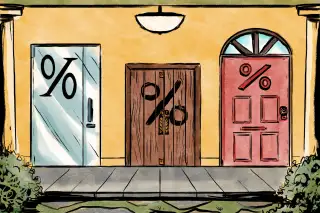
With so many alternatives on the market, choosing the best mortgage loan can be stressful. Before selecting a mortgage loan or lender, find out about the different mortgage types, terms, and types of interest rates.
Below, we’ll guide you through the process of selecting a mortgage to purchase, build, or renovate your home.
- Types of Mortgage Loans
- Types of Mortgage Loan Terms
- Types of Mortgage Loan Interest Rates
- Bottomline about Types of Mortgage Loans
Types of Mortgage Loans
A mortgage is a type of loan used to purchase, refinance, or remodel a home. Banks, credit unions, and other financial institutions offer conventional, nonconforming, and government-backed mortgage loans.
A good way to compare between different home loans is with our home affordability calculator, where you can input different loan types and terms to see a ballpark payment.
Conventional Mortgage Loans
There are different types of conventional loans, and application requirements for each depend on the loan and lender type.
Originated and serviced by several different types of financial institutions, including banks and credit unions, conventional loans tend to have stricter eligibility requirements than government-backed loans and usually require the borrower to have both a higher credit score and a debt-to-income ratio of 36%, although some lenders will accept DTI’s as high as 50%. They commonly have 15-, 20- or 30-year terms.
Conventional loans are available for purchase, renovations, or home refinance. If you’re still deciding on a type of mortgage loan or lender, check our selection for the best mortgage lenders.
Conventional mortgages aren’t insured by the federal government, and are classified as conforming or nonconforming.
- Conforming loans follow funding requirements established by Freddie Mac and Fannie Mae (two federally backed home mortgage companies created by the U.S. Congress) or exceed the loan limits set by the Federal Housing Finance Agency (FHFA).
- Nonconforming loans don’t follow those underwriting guidelines and/or exceed the FHFA loan limits.
Conforming Mortgage Loans
As we mentioned above, a conforming mortgage is a conventional loan that meets the funding criteria set by Fannie Mae and Freddie Mac, and the FHFA loan limits. The latter means that the loans cannot exceed a certain amount: for single-family homes in 2026, $832,750 (and $1,249,125 in high-cost areas). Conforming loan terms typically range from 10 to 30 years.
A conforming mortgage is suitable for those who:
- Want to avoid high-interest payments
- Can make larger down payments
- Are purchasing a home not exceeding the limits established by Fannie Mae and Freddie Mac
Nonconforming Mortgage Loans
Nonconforming mortgages are loans that don’t meet Fannie Mae or Freddie Mac’s standards for purchase, whether it’s because they don’t fulfill FHFA requirements or because the loan amount is too large. These include the three main government-backed mortgages — Federal Housing Administration (FHA), United States Department of Agriculture (USDA) and U.S. Department of Veterans Affairs (VA) — as well as jumbo loans.
FHA, USDA, and VA mortgage loans are insured by the government in the event of default but are processed and managed by authorized private mortgage lenders. These mortgages allow potential homeowners to buy a home with a down payment of 10% or less, lower minimum credit score requirements, higher loan limits, and a higher debt-to-income ratio.
Nonconforming loans are a good option for potential borrowers who:
- Don’t have a 20% down payment
- Have a low credit score and a high debt-to-income ratio
- Have a unique financial situation, such as a bankruptcy, and are looking for a tailored option
Government-backed loans are also available for refinancing other nonconforming loans. If you’re looking to refinance your home, check our selection for the best mortgage refinance companies.
Jumbo Loans
Jumbo loans are not insured by the government, and have different requirements than government-backed loans. They are considered nonconforming because they exceed the FHFA loan limits.
Jumbo loans can be used to purchase a primary residence, vacation home, and other investment properties as well as refinance an existing loan. Lenders offer both fixed or adjustable rates and a variety of terms.
To apply for a jumbo mortgage, lenders require proof of steady income, information about assets, and any cash influxes. These must demonstrate that the borrower can afford their monthly mortgage payment over the long term. Since jumbo loans are riskier for lenders than conforming loans, borrowers are often required to make a larger down payment and pay higher closing costs.
Jumbo loans are a good option for potential borrowers:
- With a high credit score and a low debt-to-income ratio
- Interested in properties exceeding the FHFA limit
Government-insured Mortgage Loans
Government-insured mortgages are loans insured by the Federal Housing Administration, the U.S. Department of Agriculture, or the Department of Veterans Affairs, and they offer potential homeowners lower credit score requirements, down payments, and closing costs. FHA, USDA, and VA loans are government-subsidized loan options.
Government-subsidized loans like FHA mortgages may require a minimum down payment of just 3.5% (provided you meet certain guidelines) and offer 15- and 30-year terms with fixed or adjustable interest rates. Others, like VA and USDA loans, don’t require a down payment.
FHA Loans
FHA loans allow potential homebuyers to purchase their home, finance home energy improvements or fund renovations. These loans are generally available for properties with 1 to 4 units that are owner-occupied and a principal residence. This means they’re not usually available for rental or investment properties.
It’s important to clarify that the FHA isn’t actually lending you the money — an FHA-approved financial institution is — but the government agency does guarantee the loan in case of default.
FHA loans are designed for first-time homebuyers or individuals who haven’t owned a home in at least three years. However, FHA loans can also be approved for those who are not first-time or recent homeowners, provided they’re purchasing a residence in a targeted revitalization area. This loan typically requires a 3.5% down payment and is available with a variety of term lengths.
Before applying for an FHA loan, you’ll need an appraisal from an FHA-approved appraiser to make sure the property follows the guidelines and requirements established by the US Department of Housing and Urban Development (HUD). Other requirements include:
- A minimum of two years of work history, or two years of gainful self-employment history
- A minimum credit score of 580 or higher is required to qualify for a 3.5% down payment
- A minimum of three years from any bankruptcy event, unless it was due to an unforeseen circumstance
- No delinquencies on federal student loans or income taxes
Bear in mind that borrowers in an FHA loan program must also pay a mortgage insurance premium (MIP) for eleven years or the life of the loan, depending on your loan-to-value ratio (LTV).
Potential borrowers can obtain an FHA loan pre-approval after a lender reviews their income, down payment amount, credit score and history.
FHA loans are a good option for:
- First-time homebuyers or potential homeowners with a low credit score
- Potential homeowners without savings for a sizeable down payment
- Homeowners interested in major renovations
VA Loans
A VA loan is partially guaranteed by the United States Department of Veterans Affairs (VA) and is provided by financial institutions such as banks and credit unions. To apply for a VA loan, potential borrowers must be military service members, including National Guard members with at least 90 days of active service, the spouse of a military service member with a full VA entitlement, or the spouse of a military member who died in the line of duty or as a result of a duty-related injury.
VA entitlement is the amount the Department of Veterans Affairs will guarantee on a borrower's loan.
Some of the benefits of VA loans are:
- No down payment required, if the sales price isn’t higher than the home’s appraised value
- No Private Mortgage Insurance (PMI) required
- Lower interest rates
- 15- and 30-year terms
- Being able to borrow up to Freddie Mac and Fannie Mae’s conforming loan limits with no down payment, in most areas
- Less closing costs
- No prepayment penalty if you pay off your loan early
VA loans require borrowers to pay a 2.3% funding fee on the loan amount. For military members who have previously taken out a VA loan, the required funding fee is 3.6% unless the borrower makes a down payment of at least 5%.
Access to VA loan programs is a lifetime benefit, and military service members can use this type of loan repeatedly. There are several different types of VA mortgages:
VA loans are a good option for:
- Military members and their spouses
- Military members interested in purchasing a home without a down payment
- Military members interested in lowering their mortgage interest rate and monthly mortgage payment
If you’re interested in this type of loan, check our selection for the best VA loan lenders.
USDA Loans
USDA loans are available to low- and moderate-income rural households and to potential homeowners in rural and some suburban areas. This mortgage is guaranteed by the United States Department of Agriculture. USDA loans are available for those interested in building, purchasing, renovating, or renewing an existing USDA loan.
To qualify, potential borrowers must meet the following criteria:
- The home must be used as a primary residence
- Total income must not exceed 115% of the U.S median family income
- Be a U.S citizen, or a Naturalized U.S. citizen
USDA loans offer 100% financing for building a new home, purchasing or rehabilitating a residence. This type of loan can also be used to cover site preparation costs or to acquire appliances, carpeting, heating, or cooling systems.
One benefit of USDA loans is that they don’t set a minimum credit score, although many lenders typically require a minimum score of 640. However, potential borrowers must provide documentation demonstrating they can manage and pay their debts. Authorized lenders require borrowers to pay closing costs, which include lender fees, title fees, property taxes, mortgage insurance premiums, and an upfront guarantee fee.
Some downsides of USDA loans include that homebuyers typically pay 2%-5% of the purchase price in closing costs and that they are available only in 30-year loan terms. The property to be financed cannot be a working farm; it must be accessible via a paved or graded road, and its water and electrical systems must be fully functional.
USDA loans are a good option for:
- Potential homeowners and homeowners in rural areas
- Households with less than the USDA household income limits
- People who are okay with a 30-year mortgage term
Home construction loans
Home construction loans are shorter-term loans designated to cover the costs of home construction or renovations. The term of these loans is typically 12 months or less, and the borrower must either repay the loan in full at the end of the term or obtain a mortgage.
The loan is disbursed as each construction phase is completed. Before the end of the term, the borrower is responsible for paying the interest accrued on the withdrawn funds.
Because of their short term, home construction loans are considered high risk by lenders and therefore carry higher interest rates. To apply, lenders require evidence of a detailed construction plan with a timeline and budget.
A home construction loan can be converted to a permanent loan, though this may be expensive because you’ll end up covering closing costs for both. Borrowers should plan accordingly and decide whether to choose a construction-to-permanent loan or a construction-only loan.
Home construction loans are a good option for borrowers who:
- Don’t have enough money to cover home construction costs
- Can only afford interest rate payments for a short period of time
- Will be able to pay the loan in full after 12 months
Balloon Mortgage Loans
Balloon loans are a type of mortgage that allows the borrower to make only interest payments for a short, fixed term of five to ten years. Afterward, the borrower must pay the remainder loan balance in one single payment.
This loan is a good option for borrowers planning on:
- Selling their home before the term ends
- Taking on a mortgage loan at the end of the term
Types of Mortgage Loan Terms
30-year mortgages
A 30-year mortgage is one of the most common term lengths because buying a home is typically the most expensive purchase a person will make. As the loan is spread out over a longer time period, borrowers can obtain a lower monthly payment.
This term length is a good option for potential homeowners with good credit looking for affordable monthly payments. Having good to excellent credit can help you obtain a lower interest rate and access larger loan amounts.
If the borrower’s financial situation improves and they’re able to pay off the loan before the end of the term, many lenders have eliminated prepayment penalties, allowing homeowners to pay the loan in full before the 30-year term ends at no extra cost.
20-year mortgages
If paying a 30-year mortgage feels long, but the monthly payments for a 15- or 10-year mortgage are too high, a 20-year mortgage is a good (though somewhat rare) option. If the borrower can lock in a low interest rate, a 20-year mortgage may be less expensive than a 30-year mortgage.
15-year mortgages
15-year terms typically have higher monthly payments but accrue less interest than 20- or 30-year mortgages, resulting in savings for the borrower.
This mortgage term is a good option for people whose financial plans might include robust retirement savings or simply being debt-free by a certain age.
10-year mortgages
10-year mortgage terms are even less common than 20-year terms, perhaps because although they offer the lowest interest rates, the monthly payments are much higher.
At the beginning of the repayment period, most of the monthly payment will go toward interest rather than principal.
This term is a good option when interest rates are low, if you’re looking to build equity quickly. However, because it comes with a high monthly payment, borrowers should be prepared for unemployment or sudden inflation, which can increase the cost of living.
Types of Mortgage Loan Interest Rates
There are two types of interest rates: fixed and adjustable. Before determining which mortgage interest rate is more suitable, review your financial situation and goals.
Fixed-rate Mortgages
Fixed-rate loans are mortgages with a stable payment and interest rate that remain fixed over the life of the loan. The only way to lower the interest rate or term length on a fixed-rate loan is to refinance.
There are three main elements you should consider when looking for a fixed-rate mortgage:
- Interest rate
- Term
- Loan amount
Fixed-rate mortgages are predictable, making it easy for potential borrowers to budget for their monthly payments. They’re best for people who plan to stay in their home for a long time and aren’t looking to purchase a starter home. One downside of a fixed-rate mortgage is that if interest rates drop, the borrower remains tied to the rate locked in at closing.
Adjustable-rate Mortgages
Adjustable-rate mortgages (ARMs) are loans where the interest rates applied to the outstanding balance can change throughout the life of the loan.
Also called variable rate or floating rate mortgages, you’ll often see ARMs written out as two numbers with a backslash in between. The first number corresponds to an initial period in which the loan will have a fixed interest rate. The second number typically indicates how often the rate will adjust after the initial period, based on a benchmark interest rate.
While adjustable periods can take place at different times, ARMs have a cap on how much the interest rate and monthly payment can increase.
ARMs are convenient for people who are either not planning on staying in their home after the initial fixed-rate period, planning on refinancing before the fixed-rate period ends, or are home-buying when interest rates are high (and they hope to see rates go down after the initial period). Conversely, a borrower might see interest rates rise once they begin to fluctuate regularly.
ARMs can be risky because monthly payments can rise as rates increase, potentially exceeding what you can afford. If you’re not sure how high a monthly payment you can afford, check the most current mortgage rates and take a look at our mortgage calculator.
Bottomline about Types of Home Loans
Since there is such a wide variety of mortgage types and loan options, choosing the best option depends on the property, its location and value, and the borrower’s credit history and score.
There are government-backed options for those with low credit scores, high debt-to-income ratios and first-time homebuyers. Potential borrowers should plan and determine which term, interest rates and lender offer the best option to afford their home and stay on track with their financial goals.