Why Your Air Conditioner Isn't Cooling Your House — and How to Fix It

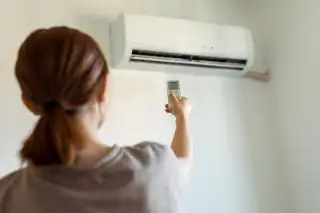
With heat waves and humid air expected across much of the country this summer, you’re going to want your air conditioning to reliably blow cool air into your home during sticky days and muggy nights. As residential energy costs soar, it’s also important that your system is in its best form to avoid unnecessarily high bills and emergency repairs.
In some instances, you’ll have to call a heating, ventilation and air conditioning (HVAC) contractor to get your equipment up and running. But in other cases, you may be able to address the issue yourself. If you find your house reaching uncomfortably high temperatures, here’s why your AC may not be working, and what you can do to fix it.
Common AC issues
The first step to fixing the issue is identifying what the problem is. Here are some common reasons your AC may not be working.
Thermostat issue
Start with checking the thermostat to make sure it hasn’t been reset, is set to the right temperature and has working batteries. Check the setting to make sure it’s set to “cool,” replace the batteries if necessary and verify that the temperature is at the right level.
While smart thermostats can help control your home’s temperature and save you money, they can also glitch. Check your Wi-Fi and make sure the app is updated to the latest version.
Dirty air filter
Dirty air filters are also a common issue, since dust and debris can keep the cool air from flowing out.
It’s important to regularly check and change your air filters. Some pros recommend doing so every month to six months, depending on the filter.
Poor refrigerant levels
The refrigerant — which is a key ingredient to keeping your air cool — levels may be low. If you’re noticing ice building up on coils, warm air coming from the vents, or hissing sounds, you may be dealing with a refrigerant issue. You’ll have to call a contractor for this issue.
Faulty capacitor
You may also be dealing with a faulty capacitor, which powers your AC’s motor.
"One of the most common issues we see is a bad capacitor,” says Joey Dooley, a general manager at ARS in Texas who has 23 years of experience in the HVAC industry. “They just don't last as long as they used to."
Blocked outdoor condenser unit
The AC system includes an outdoor condenser unit, which absorbs the hot air in your home and releases it outside. If the unit is blocked, the hot air can’t exit your house properly. A really hot outdoor unit is a sign this may be the issue.
Make sure there isn’t any dirt, debris, leaves or other vegetation blocking in its way, limiting its efficiency.
Frozen evaporator coil
Evaporator coils are part of what the AC system uses to absorb heat. If they’re frozen, they can’t do their job. This could be caused by other factors on this list, such as poor refrigerant levels.
You may be able to see ice building up on the coils, or water leakage once it thaws.
Electrical issue
Like many of the appliances in your home, your AC relies on electricity. Check to make sure you’re not dealing with a blown fuse or broken circuit breaker.
Leaky ducts
Ductwork is used to move warm or cool air, and it’s an essential aspect to your AC working properly. If ducts are leaking, cool air may be escaping. You may be able to seal ducts on your own, but the job could also require a professional, depending on how confident you are in your DIY skills.
Incorrect AC system
AC systems should be specifically fit for your home, and need to be updated over time. If the temperatures inside your home are constantly not what they should be, or you’re dealing with frequent repairs, your system may be too small or too old for your home.
Home service done the right way

When to call an HVAC pro
Once you’ve identified the issue, it’s time to fix it. In some cases, you can do this on your own. Resetting the thermostat, changing air filters, cleaning leaves off your outdoor unit and opening closed vents are all things you can do on your own.
But when you’re dealing with a bigger issue — or even are just suspicious you might be — calling an expert is necessary. If you’re noticing ice forming repeatedly on your equipment, hearing strange noises or smelling strange smells, it’s best to get a contractor to your house. You’ll also want to do this if you think there’s an issue with the refrigerant levels: HVAC technicians in the US who handle refrigerants are required to be certified by the Environmental Protection Agency (EPA).
Ideally, the contractor will be able to quickly fix your system. But in some cases, it may require a replacement. Be sure to ask for cost estimates before committing to any repairs so you can assess whether it may make sense to replace the whole unit.