
How Does Your 401(k) Match Stack Up Against the Average?
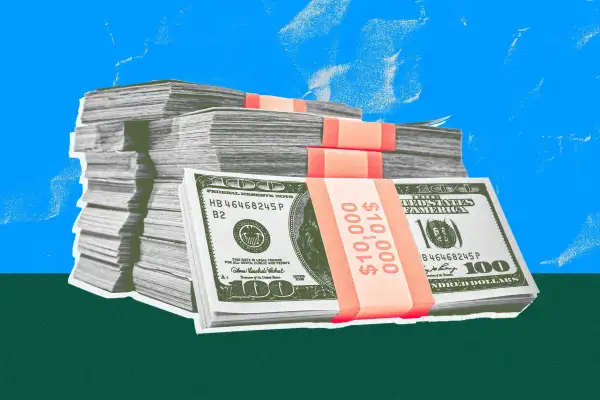
If you contribute to a 401(k), your employer likely does, too — but not all matches are created equal. Some companies offer generous matches that can boost long-term savings, while others provide only modest help or none at all, leaving workers to do more of the saving on their own.
Ascensus’ latest Compensation, Retirement and Benefits Trends Report found that 88% of companies offer matching, most commonly between 3% and 4.9% of your salary. About 30% offer more than 5%, with larger organizations and certain industries — including finance, banking, insurance and manufacturing — tending to provide more generous matches than smaller employers.
Without a match, workers have to make up that difference on their own, which can be a disadvantage over time.

The gap matters because most Americans build their retirement savings through workplace plans. The majority of the nation's retirement assets have been accumulated through employer-sponsored plans like 401(k)s, according to the Pew Research Center. But access isn't universal: Nearly half of private-sector employees — roughly 56 million workers — don't have retirement benefits through their jobs at all.
How your plan is managed can also make a difference. About 70% of companies offer professionally managed accounts, giving employees personalized guidance, while just over half provide automatic enrollment — a feature required for new plans under the SECURE 2.0 Act.
Research has consistently shown that features such as auto-enrollment make workers more likely to participate and save consistently. A recent Vanguard report, for example, found that plans with automatic enrollment see participation rates around 94%, compared with roughly 64% for plans without it.
That’s why financial advisors say the match shouldn’t be treated as a bonus, but as part of your pay. “A match is essentially a guaranteed return on your savings,” says Bethany Dever, vice president and relationship manager at Rockland Trust. The biggest mistake she sees is under-contributing or contributing inconsistently.
“Think of the match as part of your compensation," she says. "Failing to claim it is equivalent to accepting a smaller salary.”
What to do if you can't max out — or don't get a match
For workers who can't afford to max out their 401(k), consistency still matters. Jake Sadler, founder and senior advisor at Curio Wealth, says steady contributions over time often beat short bursts of aggressive saving that are hard to maintain.
"The 401(k) works precisely because it's automatic and comes out before you see the money," Sadler says. He recommends starting with whatever contribution is needed to capture the full employer match and building from there, rather than trying to save as much as possible and burning out.
If your company's match is small — or doesn't exist at all — a 401(k) can still play an important role, but it's not your only option. "Even without a match, the tax advantages and contribution limits make it irreplaceable for serious retirement saving," Sadler says.
Still, it can be worth comparing your workplace plan with an IRA, particularly for workers without access to a 401(k) or those facing high fees or limited investment options.
Dever points to Roth IRAs as another option: Unlike a traditional IRA, which may offer a tax break upfront, Roth IRA contributions are made with after-tax dollars, but the money grows tax-free and qualified withdrawals in retirement aren't taxed.
Both accounts offer tax advantages, but the main difference is when you get the tax break. It's also worth noting that Roth IRAs have income limits, and IRAs generally have lower annual contribution limits than 401(k)s, which can make workplace plans a better option for higher savers.
In the end, a bigger match can give workers a head start, but saving regularly and sticking with it over time matters most. That said, skipping the employer match when it's available means leaving money on the table.
Top Precious Metals Company on Inc. 5000
Inc. 5000 Top Gold Company with A+ BBB Rating
- Up to $25K in free silver on qualifying purchases
- Same-day IRA Processing - Start Instantly
- No Buy-Back Fees - 100% Satisfaction Guarantee: 7 Day Refund
- Free FREEDOM Package: Setup, Insured Shipping, and Secure Storage
5-star rating with the BBB & Trustpilot

Up to $20,000 in Free Metals on Qualifying Orders*
-
Free Gold IRA Setup With Expert Guidance
- 100% Low Price Guarantee
- No-Fee Buy-Back & Commission-Free Programs
- Free Shipping & Insurance on All Orders
Up to $10,000 in gold credit

Up to $15K in Free Silver + Zero Account Fees on Qualifying Purchase*
- Endorsed By Robert Kiyosaki, Renowned Finance Expert
- Fast, Free, Insured Shipping on Gold & Silver Purchases
- 100% No-Cost IRA Rollover With Buyback Commitment
- Two Decades of Expertise With A+ BBB Rating
Qualify for up to 10% in FREE silver
Special Offer - Get Up to 10% in Bonus Silver OR Gold
- Highest Industry Buyback Guarantee
- Winners of "Best Customer Service" and "Gold IRA Education" plus only 9X INC5000 Award Recipient
- Over 8,000 5-STAR Reviews from Google, TrustPilot, Consumer Affairs, Retirement Living and the Better Business Bureau
- Endorsed by Sean Hannity, Tom Selleck, Dennis Quaid, and Chuck Norris
More from Money:
85% of Gen X and Boomers Regret This Retirement Savings Mistake
Millennials Are Finally Joining the Ranks of 401(k) Millionaires
You Might Be Overestimating How Much Money You Need to Save for Retirement