
Trying to Get Hired in 2026? This Free Resume Template Is Tailored for AI
If job hunting feels more daunting than usual, you’re not imagining it. As the U.S. job market shows signs of slowing, artificial intelligence is playing a bigger role in how employers manage one of the most competitive hiring environments in years.
Many companies now use applicant tracking systems, or ATS, alongside AI-powered screening tools to quickly evaluate resumes — often before a human recruiter ever gets involved. According to a report from the Society for Human Resource Management (SHRM), 51% of organizations said they used AI to recruit workers in 2025.
At the same time, job seekers are turning to generative AI tools to help draft or edit their applications — putting AI on both sides of the hiring process.
The shift has left many folks wondering whether they need to optimize their resumes for machines rather than people — or somehow for both. But the good news is that the fundamentals still matter the most. A clear, well-organized resume that highlights relevant skills and accomplishments can perform well with automated screening tools and still appeal to human recruiters. Career experts say the best way to make your resume AI-friendly is to keep it simple, targeted and easy to read — no tricks required.
Below, experts break down how to structure a resume that works for both AI and humans, along with a free template that meets those standards.
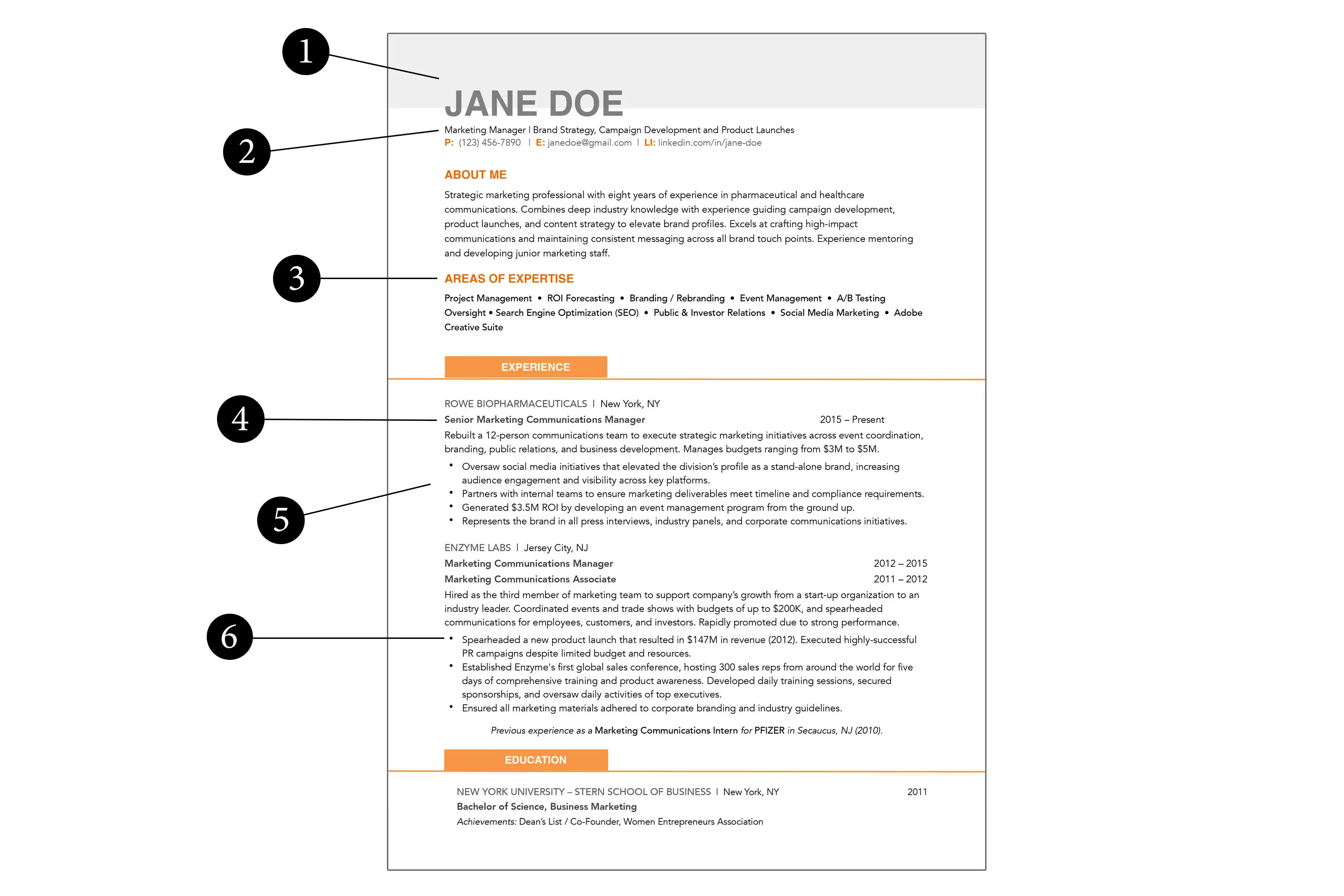
1. Keep the format clean and easy to read
A simple, linear layout is the foundation of any effective resume. Complex design elements, such as tables, infographics or headshots, can confuse both AI-powered screening tools and human recruiters, slowing down the review process.
“A clean, simple format that maximizes readability is critical when it comes to resumes,” says Keith Spencer, a career expert at FlexJobs. “When job seekers use complex design elements like tables, text boxes or graphics, it can interfere with a system’s ability to properly parse information and also slow down or confuse a recruiter who’s scanning your resume quickly.”
File type is another important factor. Most application portals accept Word documents or PDFs, but text-based PDFs are preferable to image-based files, which can cause issues with automated screening. “Candidates should always check the application portal for guidance, but typically a Word document or a PDF is acceptable,” Spencer notes.
Font style and page length matter, too. Standard fonts such as Calibri, Arial or Times New Roman are easiest for ATS systems to read. But use your best judgment and avoid anything difficult to read. When in doubt, prioritize readability over style.
And lastly, one-page resumes are no longer a strict rule — but brevity is still key. “Just because multiple pages are allowed doesn’t mean they’re necessary. Job seekers should aim to be concise and include only information that’s directly relevant to each specific role,” Spencer says.

2. Add a targeted headline
The top of your resume is prime real estate, so it should quickly highlight what you do and what you're best at. Instead of listing only your job title, consider adding a brief headline that combines your role with a few of your most relevant skills or areas of specialization.
“List some key skills and tools you work with, like 'Marketing Analyst, Google Analytics, SQL and CRO Strategy,'" says Lauren Mastroni, a career expert and digital content writer at Resume Genius. “These keyword-rich headers are scannable by both recruiters and AI tools and immediately communicate your value.”
For roles that don't rely on technical tools, the same approach applies. If you're in sales, customer service, operations or people management, your headline should focus on what you do best — whether that's managing accounts, improving processes or leading teams.
3. Use clear section labels
Clear section labels help AI tools accurately categorize your information and allow recruiters to quickly find what they're looking for. Stick with standard headings such as "About Me,""Areas of Expertise,""Achievements,""Experience" and "Education," explains Sam DeMase, a career expert at ZipRecruiter.
While creative section headers may feel more personal, they can make it harder for automated screening tools to interpret your resume correctly. You want to avoid headers like "Career Highlights" (instead of "Experience") and "My Story" (in place of "About Me"), which may cause key information to be overlooked.
4. Standardize your job titles
Job titles can vary widely from company to company, and unusual or creative titles may not translate well outside your organization. To make sure your experience is accurately understood — by both recruiters and AI tools — it's important to use clear, standardized job titles.
“The job title should reflect the work. It should be specific, not broad,” says DeMase.
Aligning your titles with commonly used industry terms can make your resume easier to scan and more likely to match the language in job descriptions.
For example, playful or internal titles might need a tweak:
- Growth Wizard → Growth Marketing Manager
- Communications Manager → Director of Communications, Corporate Affairs
- Team Lead → Engineering Manager
- Product Owner → Senior Product Manager
5. Tailor your resume to each role
Sending out the same resume for every job may save you time, but it can hurt your chances. Both ATS software and AI tools are designed to look for specific skills, qualifications and language pulled directly from the job description.
"If a job description for a role says 'project lifecycle management' and you write 'oversaw end-to-end project execution' on your resume, the company’s screening software might miss it even though the meanings are similar,” says Mastroni.
That doesn't mean you need to copy and paste the entire job description into your resume. Instead, take a few minutes to identify important keywords and phrases in the job ad and make sure your experience reflects that same language, where it accurately applies to your experience.
6. Quantify your impact
Listing job duties can show what you did, but it doesn't show how well you did it. Employers want a clear picture of the impact of your work — which is especially true when AI tools and recruiters are quickly scanning resumes for evidence of results.
“Employers don’t just want to know what you did; they want to understand how you did it and what results you achieved," says Spencer. "How did your actions support clients, strengthen a team or help the organization reach an important goal? Whenever possible, pair these outcomes with measurable results to clearly demonstrate the value you bring."
That means highlighting your skills and pairing each with a clear, measurable example, whether that means revenue growth, engagement gains, efficiency improvements or other concrete results tied to your role.
Don't let AI do the writing
AI tools can be useful for job seekers, but relying on them too heavily can backfire. Resumes filled with generic phrasing or robotic language may raise red flags for recruiters and can create problems later in interviews, when candidates are asked to explain their experience in more detail.
Instead, experts recommend using AI as a support tool rather than a substitute for your own voice.
"Job seekers should always customize their resume’s content to reflect their real experience, voice and results," says Spencer. "That means fact-checking every detail, clarifying context that only they can provide and adjusting the language to align with the specific role. The goal is to use AI to enhance your resume, not to replace you."
More from Money:
New Year, New Job? Career Experts Share Their Top 5 Tips for Getting Hired
6 Best Job Posting Sites for Employers of 2026
Few 'Quality' Jobs? 60% of Workers Dissatisfied With Pay and Opportunities