HVAC Replacement vs. Repair: How to Decide When It's Time to Replace Your System

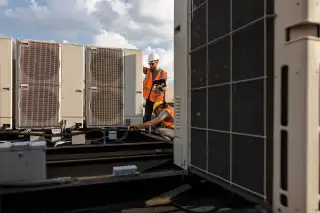
Summer is fast approaching, and you notice your heating, ventilation and air conditioning (HVAC) system is already struggling. Is it a sign that it's time to bite the bullet and replace it?
Deciding when to replace an old heating and cooling unit can be difficult. On the one hand, the cost to replace a full HVAC unit can range from $5,000 to $28,000, according to CBS News, depending on the home's size and the type of system. A repair, on the other hand, may be the more affordable option in the short term — but you may end up spending more in the long run if you have to make multiple repairs to keep the system running.
One of the most common factors cited when considering between repair and replacement is your HVAC system's age. Most units have a useful life of about 15 to 20 years, though they often start needing more frequent repairs after 10 to 15 years. However, Joey Dooley, a general manager at ARS — a residential HVAC and home services company — in Texas, says this guideline doesn't always apply.
"In some cases, an eight- or nine-year-old system makes sense to replace. In other cases, you may have a system that's 15 years old that still makes sense to keep," Dooley says.
Instead, analyzing your heating and cooling system's performance and looking for other signs of wear that determine the true cost of ownership can help you make the right financial decision, Dooley says.
When repairing your HVAC system makes financial sense
If your AC unit is relatively new and has been working properly, repair is most likely the better option. But there are other signs you can look for that will point you in the right direction.
The repairs are minor
Some repairs are relatively inexpensive to fix. If the problem is a refrigerant leak, clogged drain lines, a faulty thermostat, a dirty filter or a burnt-out fuse, repairing is the better option. A warranty may cover the replacement cost of these items if you have one, but it also won't break the bank if you have to pay out of pocket. According to home services website Angi, the average HVAC repair costs $350, though minor fixes can run as little as $100 and complex repairs can exceed $3,000.
The unit is still under warranty
If the manufacturer's warranty is still valid, or you purchased a home warranty that includes your HVAC system, it should cover your repair costs. Review your policy to see what is and isn't covered, and what the deductible, if any, will be. The warranty may cover most or all of the cost of a major repair and prolong the life of your unit.
$5,000 rule
A common guideline for deciding whether to repair or replace is the $5,000 rule. Using this rule, you multiply the estimated repair cost by your HVAC system's age. If the result exceeds $5,000, it makes more financial sense to replace the system. If the result is less than $5,000, a repair could be the better option.
The unit is still working efficiently
If the HVAC system is cooling and heating as it's supposed to, there hasn't been a spike in your utility bills and there have been few or no previous repairs required, a full replacement is probably not necessary.
Signs it's time to replace your HVAC unit
Eventually, your heating and cooling system will no longer work properly and need replacement. These are some of the tell-tale signs that it's time for a new HVAC system.
Constant repairs are required
As your HVAC unit ages, various parts will begin to break down. If you've had to repair the unit frequently over the past two to three years, it might be time to consider a replacement. Installing a new system may also be the best option if repairing your HVAC system would cost more than 50% of its replacement cost, or if repairs exceed the $5,000 rule explained above.
Your utility bills are rising
Older units are less energy efficient than modern systems. HVAC units that are 10 to 15 years old or older may still work, but may take longer to cool your home or struggle to maintain the proper temperature during colder months — both of which consume more energy. A new unit will not only work more efficiently, but you'll also be able to recover the replacement cost over time by saving on utilities.
The warranty has expired
Most warranties will last from five to 10 years. If the warranty on your unit has expired and the repair costs exceed half the replacement cost, you may want to consider installing a new HVAC system. If the repairs are minor and your unit isn't very old, repairing it is the better option.
The unit uses Freon®
Older air conditioning units (generally those manufactured before 2010) may use a refrigerant called R-22, or Freon®. The Environmental Protection Agency (EPA) banned the production and import of R-22 as of January 1, 2020, so any remaining supply now comes only from recycled or stockpiled stock. It is increasingly difficult to find this refrigerant, and it can be very expensive if you do find it. Based on the unit's age, it is likely nearing the end of its useful life. If your unit uses this refrigerant and frequently breaks down and requires repairs, replacement is your best option.
It's worth noting that newer systems face a refrigerant transition of their own: under the EPA's phasedown of hydrofluorocarbons (HFCs), air conditioners manufactured on or after January 1, 2025, must use lower-emission refrigerants such as R-454B or R-32 instead of R-410A. R-410A systems are still legal to run and service, but as supplies tighten, that refrigerant is expected to get pricier over time, too.
If you're still undecided about whether to repair or replace, consult with an HVAC expert who will analyze your system and walk you through your alternatives. They will explain the costs, benefits and drawbacks of each. Once you have the full picture, you'll be able to make the decision that best fits your needs.
Your comfort is fully protected