
After a Life of Saving, Spending Money in Retirement Can Be Surprisingly Hard

- Social Security Funds to Run Dry in 8 Years, Prompting 17% Benefits Cut
- This 401(k) Proposal Could Give Retirees an Easier Way to Donate to Charity
- Inflation Could Push Social Security COLA Above 4% in 2027
- Reignited Inflation Could Push Social Security COLA Past 3% Next Year
- The 2027 Social Security COLA Is on Track to Look a Lot Like This Year’s

- What's New for Social Security in 2026? These 5 Changes Start in January
- Retirees' Hidden Asset: Home Equity Options for Older Homeowners
- Here's Who Actually Needs Long-Term Care Insurance and When to Buy It
- What Retirees Should Know Before Tapping Home Equity to Pay for Medical Expenses
- How HELOCs Can Help Retired Homeowners Manage Expenses
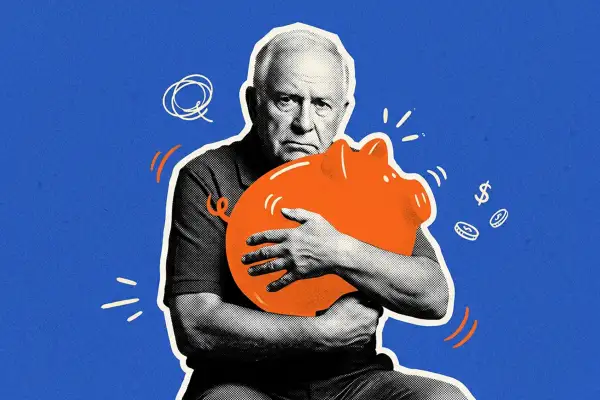
A growing body of research suggests retirees aren’t spending as much money as they could, and it’s likely due to FORO: the fear of running out.
A study published this month in the academic journal Financial Planning Review found that, contrary to many financial models, inflation-adjusted spending in retirement tends to decrease over time — even for retirees with more than enough savings to live comfortably.
David Blanchett, the study’s author and the head of retirement research at Prudential Financial, says the spending pattern resembles a “smirk,” spending that starts strong and then trails off as the retiree gets older, creating a downward slant on a graph.
Must Read
“While some of the reduced spending can likely be attributed to retirees who need to cut back because they are underfunded, this analysis suggests even those retirees who could materially increase spending do not tend to do so,” Blanchett wrote in the study.
Separate research published earlier this month by Corebridge Financial provides clues as to why retirees aren’t spending. About half of respondents polled by the firm said they feel uncertain about spending their savings, and fewer than 1 in 3 Americans approaching retirement have a plan for withdrawing their savings once they retire.
Don’t let FORO ruin your retirement
Financial guru Jean Chatzky, owner of HerMoney and columnist for AARP, partnered with Corebridge Financial to create a “decumulation” planner, a guide to help people more confidently use the money they spent decades accumulating.
When most people think of retirement, they probably think of savings. That’s how the topic has been framed for decades, according to Chatzky.
“It's a message Gen X, the first without pensions, took to heart and later generations followed,” Chatzky said in a news release. “But what's become evident as these folks start retiring is that without a plan of how to actually use that money, they face a retirement of uncertainty.”
Where People Are Buying Gold Right Now
Part of that uncertainty is likely tied to health care costs, as Blanchett’s research suggests.
“Health care risks are a clear wildcard when it comes to planning for retirement,” Blanchett said.
His previous research introduced the idea of the retirement spending “smile,” which he says is a reflection of the various stages of retirement: the “go-go” years of early retirement that are filled with hobbies and travel, the “slow-go” years where age naturally slows the retiree down and finally the “no-go” years in which spending picks back up again to pay for long-term care and other medical costs.
But in his updated analysis, he notes that the average retiree does not experience significant health care expenses later in life, and that the typical uptick in health care costs later on tends to balance out with falling spending in the travel and hobbies categories.
“Concerns about running out of money often shape spending habits that limit fulfillment later in life,” said Terri Fiedler, president of retirement services at Corebridge. “Having a thoughtful decumulation strategy can help individuals manage complex financial decisions.”
For many retirees, the 4% withdrawal rule — in which they withdraw 4% of their savings at retirement and then adjust that number each year for inflation — is about as nuanced as the plan gets. But even the creator of 4% rule recently updated his recommendation to 4.7% as a "worst-case scenario" and often recommends higher withdrawal rates, between 5% and 5.5%.
At a recent conference hosted by White Coat Investors, Christine Benz, the director of retirement planning for Morningstar, shared tips for retirees who are scared of spending down their nest egg.
She recommended working with a financial planner and having them give you an allowance you can safely spend. Some retirees may be able to trick themselves into spending by creating "buckets" for different purposes so they don't feel they're overspending in any one area or by choosing a certain type of income, like their Social Security check, to spend fully each month.
She also spoke of the benefits of single premium immediate annuities, or SPIAs, which are purchasable with an upfront lump sum and provide guaranteed income for life. A separate study found that strategically combining SPIAs with investment withdrawals can boost your retirement income by 23%.