
Social Security Trust Fund to Run Out of Money in 2032, a Year Sooner Than Expected

- 1.3 Million Taxpayers May Be Owed a Refund From 2022. Here's How to Claim It Before the Deadline
- Study Reveals How Much Money You Need to 'Thrive' in Today’s Economy
- Some Student Loan Borrowers Are Getting $2,000 'Surprise Checks' From an Old Navient Lawsuit
- How Buying a Home Before You Turn 30 Is a ‘Wealth Multiplier’
- The 2027 Social Security COLA Is on Track to Look a Lot Like This Year’s

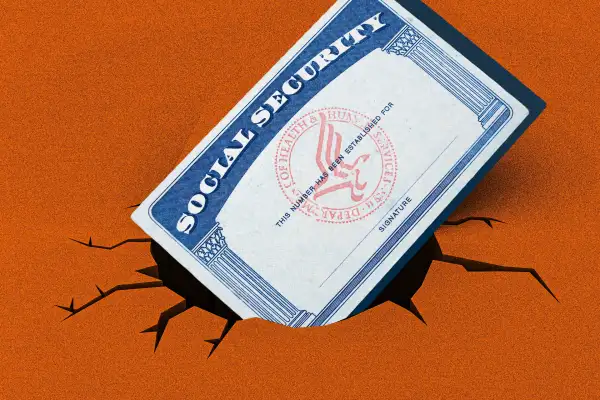
The coffers that fund Social Security’s retirement payments are running dry faster than expected.
An economic outlook released Wednesday by the nonpartisan Congressional Budget Office has determined that Social Security’s Old Age and Survivors Insurance trust fund will become insolvent by 2032, one year sooner than last estimated.
This impacts one of two major trust funds that fuels Social Security payments. The dwindling reserve is earmarked for benefits to retirees and immediate family members of deceased workers, accounting for over 62 million Americans, or about 90% of all Social Security beneficiaries. The remaining beneficiaries receive disability benefits funded by a separate trust.

Still, they could ultimately be impacted, too. If Social Security's retirement trust were to become insolvent, the remaining trust fund would be used to bankroll all benefits, and it would last only one year before running dry, as well.
But experts say that’s a pretty big if — and the financial woes besetting Social Security sound a lot scarier than they really are.
Is Social Security really going bankrupt?
About a third of Americans say they believe Social Security won’t be there for them when they retire, according to a December survey from the CATO Institute, a libertarian think tank.
These fears are stoked by the idea that Social Security is going bankrupt. But economist Stephen Nuñez argues that the word “bankrupt” is misleading and isn’t a good way to think about what’s happening with Social Security.
“There is no bankruptcy or collapse in the cards,” Nuñez, an economic director at the liberal-leaning Roosevelt Institute, wrote in a recent report.
That’s because, experts say, even if Social Security’s trust funds were fully depleted, about 80% of Social Security benefits would continue to flow because they are funded in real time through payroll taxes. And that scenario assumes Congress ignores the issue.
“Even if nothing is done, people will continue to receive the bulk of their benefits,” Alicia Munnell, founder of the Center for Retirement Research at Boston College, wrote last May. “No one, however, wants to see an immediate 20% across-the-board benefit cut in Social Security retirement benefits.”
Social Security is extremely popular regardless of political affiliation, leading Nuñez to find it unlikely that lawmakers will simply let Social Security fall into insolvency.
He noted that Social Security faced a similar shortfall in the 1980s, and lawmakers rallied to pass reforms in 1983. Those changes were supposed to ensure decades of financial stability until 2058. However, the Great Recession and increased income inequality have changed the calculus the reforms were built upon, and Social Security is in need of a legislative tweak again.
Some popular fixes include subjecting wages over $400,000 to the payroll tax, gradually increasing the retirement age and reducing benefits for top earners.
Nuñez said finding the best fix — “rather than predictions of doom and gloom” — should be the focus.
More from Money:
Millions Face a Tax Shock on Social Security Back Pay. Congress Is Racing to Fix It
I Plan to Claim Social Security at Full Retirement Age Just to Invest the Money. Is This Genius?
Think Financial Planners Are 'Only for the Wealthy'? Here's Why That's a Myth