
This Under-the-Radar Restaurant Stock Is Outperforming Chipotle and McDonald's

- How Elon Musk's SpaceX Could Supercharge the Next IPO Frenzy
- From AI to Energy, 'Thematic' ETFs Make It Easy to Invest in Hot Market Trends
- You Can Invest in SpaceX Before It Goes Public — if You're Willing to Pay
- Is This 2008 All Over Again? Fears of a Financial Crash Grow Among Investors
- Gold Prices Today: March 30, 2026

Money is not a client of any investment adviser featured on this page. The information provided on this page is for educational purposes only and is not intended as investment advice. Money does not offer advisory services.
Investors often turn to flashy, headline-grabbing growth stocks to construct the core of their portfolios. It's why companies like Nvidia, Alphabet and other members of the Magnificent Seven command so much attention.
But because they are inherently volatile, tech stocks' enormous upside potential is matched by their capacity for significant losses. That can make them a bad fit for people nearing retirement or investors who can't stomach high-risk, high-reward investments.
Must Read
Conversely, under-the-radar stocks operating in understated industries can often provide stability, consistency and steady returns for buy-and-hold investors.
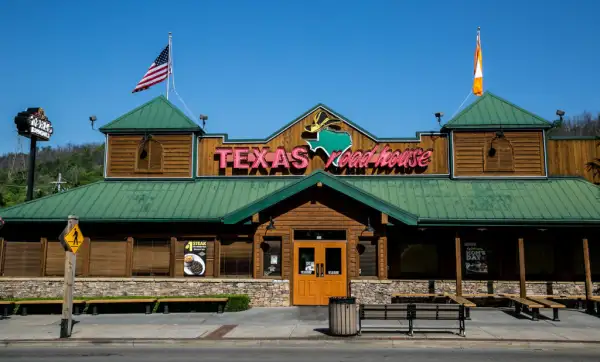
Texas Roadhouse (TXRH) is the perfect example. Since bringing on a new CEO five years ago, the company's stock has outperformed Chipotle (CMG) and McDonald's (MCD) combined. Here's how it grew from its modest Midwest roots to a modern portfolio staple.
How a new CEO turned Texas Roadhouse into the largest casual dining restaurant
Despite its Lone Star State branding, the 33-year-old restaurant chain's first location opened in Clarksville, Indiana. Texas Roadhouse held its initial public offering (IPO) in October 2004, and its stock has gained over 1,255% since.
Since its pandemic-era lows, it has generated twice the returns it did for the preceding 16 years since its IPO. In just the past five years, shares of Texas Roadhouse have gained 49%, outperforming Chipotle (12%) and McDonald's (21%) — together — over the same period.
The consumer discretionary sector, into which Texas Roadhouse falls, is highly cyclical. When inflation erodes purchasing power and consumer confidence weakens, dining out becomes a luxury for many. But even as the broader restaurant industry faces declines, Texas Roadhouse has figured out how to maintain foot traffic.
Same-store sales is a metric that measures year-over-year revenue changes for established business locations. For chain restaurants, same-store sales growth averages 2.3%. For Texas Roadhouse, it's 8.3%.
A big part of that success involves a modernization strategy enacted in March 2021 when the company's current CEO, Jerry Morgan, stepped into the role. Morgan's efficiency measures have been pivotal in Texas Roadhouse's strong performance over the past five years.
Examples include the use of tablets to enable tableside payment and tipping, a transition to a digital kitchen display system, and more accurate app wait times. The company has also embraced a managing partner model that gives local operators equity in Texas Roadhouse locations without traditional franchising.
Where People Are Investing Right Now
Perhaps most importantly, as McDonald's fixed-price $1 menu items have disappeared and Chipotle's bowls have approached $15, Texas Roadhouse has managed to keep prices affordable. According to Texas Roadhouse's website, menu items at Outback Steakhouse and LongHorn Steakhouse are between 10% and 20% more expensive.
The result: In 2024, Texas Roadhouse became the largest U.S. casual dining restaurant by sales, having surpassed Olive Garden, Chili's and Applebee's.
The numbers don't lie
Expansion has played a key revenue driver. Texas Roadhouse is in the midst of a long-term plan to reach 900 domestic locations, which Morgan increased from the previous target of 700–800. With 744 locations currently, the company has averaged between 30 and 35 new restaurants per year.
That has translated into an average annual revenue growth rate of more than 20%. For chain restaurants, 3% to 5% is considered desirable. Texas Roadhouse has only missed analysts' revenue expectations once in the past 12 quarters.
Since Morgan took the reins, the company has also seen exponential net income (aka profit) growth. In 2021, that figure stood at $245 million; by the end of 2024, it had reached a record $434 million. Even in 2025 amid waning consumer confidence, tariff policy fallout and record-high beef prices, Texas Roadhouse managed to achieve $406 million in profit.
Another telltale sign of its long-term potential is institutional ownership — the percentage of shares owned by the so-called "smart money," including asset management firms, mutual funds and investment banks.
For the average S&P 500 company, that figure is approximately 75%. For Texas Roadhouse, institutional ownership is nearly 95%.
The stock is also alluring for income investors. It pays a dividend that currently yields 1.9%, or $3 per share annually. But more impressively, its distributions are increasing. Texas Roadhouse has an annualized five-year dividend growth rate of nearly 50%, and it has increased its payout for six consecutive years.
Interested in adding Texas Roadhouse to your portfolio? After conducting your own due diligence, you can gain direct exposure by owning the individual stock or get indirect exposure through sector or thematic exchange-traded funds (including the iShares Core Dividend Growth ETF or the State Street Consumer Discretionary Select SPDR ETF).