
Why You Still Need to Carry a Wallet, Even in a Tap-to-Pay World
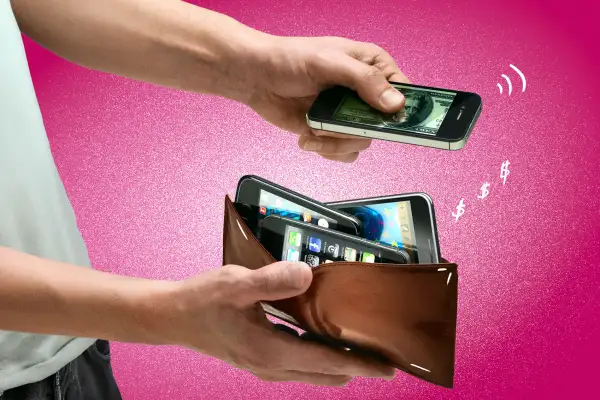
A growing number of people have decided to leave the billfold behind, both metaphorically and physically.
A recent survey found that 5% of Gen Zers — people born between 1997 and 2012 — don't carry a wallet anymore. The New York Times declared it a trend last year. But is this a brilliant idea or a bad one?
"The truth is, the concept of a 'wallet' has gone through modern-day transformations, and it can live in your back pocket, in your phone or via an app," Marissa Cazem Potts, Intuit financial advocate, says in an email. "These days, there's an easier way to access your money with modern technology."

Indeed, digital wallets are everywhere. Shoppers who don't already use them likely will soon: According to a study earlier this year, two-thirds of the world's population will own a digital wallet by 2029. That's 5.6 billion people (with a B).
Ditching a physical wallet certainly has its pros. Elaine King, a CFP Board ambassador, admits she herself has done it by accident and realized the ability to travel light is nice: "It's obviously convenient because you don't have to carry anything but your phone," she says.
The fewer items you're juggling, the easier it is to keep hold of them, which can be useful especially in places with pickpockets.
Plus, where wallets are analog, phones are high tech. Cazem Potts points out that most digital payment methods offer encryption and biometric protection like FaceID or fingerprint scans, which can make them harder to compromise than a lost or stolen wallet with physical cards. They're also trackable and wipeable.
From a financial hygiene perspective, using a phone as your wallet can help you keep track of what you're spending so there are no surprises. (You're already staring at your X notifications hoping to conjure Harry Styles' next album,, so why not scroll through your transaction alerts while you're at it?) This has the added benefit of helping you quickly identify and limit the scope of fraud.
Alas, that's… kind of where the perks end. King, the founder of the Family and Money Matters Institute, says there are a lot more disadvantages to the no-wallet strategy than advantages. One of the biggest threats? Not every retailer has embraced Apple (or Google) Pay.
Although merchants are modernizing fast, just 57% of small businesses accepted digital wallets as of last year. On the other hand, 94% accepted physical cards.
And even if a store does accept a digital wallet, there's no guarantee it'll work in a situation like a power outage, King says. Earlier this year, Spain and Portugal lost power to their trains, traffic lights, ATMs and phones for several hours. If your phone loses service — or even just dies in the course of everyday use — and you're not carrying cash, transactions could become awkward at best and impossible at worst.
This isn't just a financial hurdle, either. Folks often keep a host of personal documents in their wallets that can be hard to replicate. Many states offer mobile-friendly versions of residents' driver's licenses, but they may or may not be good for airport security and age verification at bars.
Perhaps most crucially, walking around walletless could also drastically change your spending habits.
The pain of paying tends to be higher when using cash and lower when using credit cards. The ease of tapping your phone takes the risk to a whole other level.
A 2024 PYMNTS report found that digital wallet users, on average, spend 31% more than those using other payment methods. Young folks are particularly susceptible to temptation: Millennials spend 51% more, and Gen Zers spend 60% more when using digital wallets.
"When paying is as simple as tapping your phone, that frictionless experience can make it harder to pause and reflect," Cazem Potts says. "Without the physical act of handing over cash or even pulling out a card, it's easier to feel disconnected from your spending and overspend without realizing it."
Despite the growing adoption of digital wallets, there are drawbacks to ditching your wallet entirely. Paring down, not totally abandoning, the stuff you tote around may be the way to go.
"Ultimately, the goal is to carry less but still feel covered for whatever your day brings," Cazem Potts adds.
Up to 2-day-early paycheck

Earn up to 4.00% APY* & up to $50 or $400 with direct deposit*
- Limited Time Offer - New accounts earn a 0.70% APY boost to 4.00% for up to 6 months with eligible direct deposit*
- $0 min. balance to earn APY
- Open Checking & Savings Accounts with 1 Sign Up
- Up to 2-Day-Early Paycheck3
- Access additional FDIC insurance up to $3M on deposits4
- No Account Fees5 & No-fee Overdraft Coverage6
*Terms Apply
No monthly maintenance fees

- $0 Min. Balance to Earn APY on Barclays' Tiered Savings
- No Monthly Maintenance Fees
- Easy Direct Deposits & Online Transfers
- Deposits are FDIC Insured
*Rate as of 2/20/2026
Open an account in 5 minutes

- With a Balance of $5,000 or More*
-
Earn 0.25% APY with a Balance of Less than $5k*
-
$100 Minimum Deposit to Open Account
-
No Account Opening or Monthly Service Fees
-
CIT Bank Account is FDIC Insured

Earn 3.50% APY* with Synchrony Bank High Yield Savings
- Savings Products with competitive rates and no minimum balance.
- Save easy with Synchrony Bank. Our app makes it a snap to bank anywhere; manage accounts from your smartphone or tablet
- No monthly fees
- Member FDIC
*Rate as of 1/27/26
More from Money:
Is It OK to Put Stickers on My Credit Card?
Why Are Some Credit Cards Metal?
Does Writing 'See ID' on a Credit Card Actually Help Prevent Fraud?