Why Two ‘Identical’ HVAC Quotes Can Still Be Thousands Apart

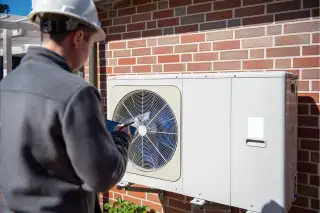
Ever wonder why estimates for a heating, ventilation and cooling (HVAC) system repair or replacement are often so wildly different?
As the saying goes, the devil is in the details. Cost estimates can vary significantly depending on several factors, including the type of work required, labor costs and the quality of the new equipment. Just because a quote is expensive doesn't automatically mean you're being taken advantage of. In fact, a super-cheap one may end up costing you much more, according to Scott Urquhart, a sales and operations executive at ARS.
"There are things that you can save money on initially," he says. "But chances are those are the things that you will pay for in the long term, in the life and performance of the system."
To truly evaluate different HVAC cost estimates and make the best choice for your needs, you'll want to examine the detailed breakdowns and compare them on an item-by-item basis. The following are major components of an HVAC repair or replacement you should review before signing a service contract.

Equipment specifications
When looking at HVAC repair estimates, remember they should be for the same type of equipment. Steve Wade, senior director of operations and procurement at ARS/Rescue Rooter, says that some estimates may only cover a partial replacement of heating or cooling components, resulting in a lower estimate but potentially overlooking other parts that should be replaced.
"In some cases, you might see a company that is cutting corners and is only going to replace the box — that’s the box of the furnace or the box of the evaporator coil — and leave every other component to fend for itself, as if it’s in perfect working condition," Wade says.
If you're getting estimates for a new HVAC system, an apples-to-apples comparison becomes even more important, as there are significant differences in cost and efficiency between low- and high-end units.
A basic HVAC unit, for example, that runs at only one speed and continuously turns on and off to maintain temperature could cost as little as $5,000 to replace, according to home services provider Angi. A high-efficiency, variable-speed system that continuously adjusts its output can cost upwards of $20,000 but can reduce energy bills.
Load calculation
This calculation determines the correct size of the HVAC system required to keep your home comfortable. You may see it referred to as a Manual J load calculation. Several factors go into determining how many BTUs (British thermal units) or tons are needed to heat and cool your home, including:
- Total square footage of the building, including ceiling heights and floor layout
- The insulation — also known as the R-value — in the walls, floors, attics and basement (the higher the R-value, the better insulated the home is)
- The number placement and energy efficiency ratings of doors and windows
- Climate zone and sun exposure
- Any air leaks that may exist
- The number of people living in the home and the number of heat-generating appliances
Some contractors may determine what size HVAC you need by simply eyeballing the space or relying on the home's square footage. This type of calculation is less labor-intensive and results in a lower cost estimate, but it can often lead to installing a system that is either too small or too large for the space. Either way, the result is an inefficient system that consumes more energy and, in the case of a smaller-than-needed system, experiences frequent breakdowns.
Ductwork
The ducts and vents are the pathways that distribute fresh, clean air throughout your home (and remove stale air from it). Sometimes, during a home renovation, an HVAC company will recommend modifying existing ductwork to ensure proper heating and cooling.
Inefficient airflow through the home, uneven room temperatures or whistling noises also typically require ductwork to improve the HVAC unit's performance. A modification may also be necessary to fix ducts that have been damaged, collapsed or corroded due to moisture. The cost of this depends on the scope of work and can range from a few hundred dollars for minor changes to several thousand dollars for more significant repairs or modifications.
Replacing AC line sets
Line sets are the copper tubes that connect the indoor and outdoor AC units; they carry the refrigerant that cools the home. The set also typically includes insulation, electrical wires so the units can communicate with each other, connection fittings and a wrap to protect the set from outdoor elements.
Line sets are usually replaced when a new unit is installed or damaged. But beware: Some estimates may cut corners by excluding a replacement from the scope of repair work.
Electrical upgrades
You may need a new electrical panel, especially if you own an older home and are installing a new HVAC unit. Old electrical panels provide 60- to 100-amp service, meaning that's the maximum amount of energy your home can draw from the electrical grid at any given time. New HVAC systems typically require 220 amps.
A proper estimate for a new HVAC system will include an electrical load calculation to ensure your service panel is adequate. While you could run 220 amps on a 100-amp electrical panel, your HVAC unit will not function efficiently and cause an overload.
Permitting fees
Whenever you're installing a new HVAC system or heat pump, modifying ductwork, adding new areas to the system or connecting gas lines to heating appliances, the company you work with will need to obtain a permit. Permitting fees vary by location and type of work involved; they can range from less than $100 to $500 for most residential properties. Some companies will charge a flat rate, while others may provide an estimate based on the total cost of the job or on the number and type of units installed.
Warranty
Your new HVAC unit will come with a manufacturer's warranty that covers the cost of defective or broken parts during a specific period. Most manufacturers will provide a five-year warranty, although some may offer longer terms.
The company installing your new unit will also provide a warranty covering service fees and labor costs for evaluation and repair. Most labor warranties cover the first one to two years after installation. Differences in warranties can lead to discrepancies in cost estimates, which you should review before choosing a contractor.
Labor costs
As with permitting fees, labor costs can also vary widely. Service costs can range from $100 to $250 per hour or more, depending on the complexity of the repair or installation, the home's location and the type of system. Labor costs can account for 50% or more of your estimate, so it's important to compare the scope of the work being quoted for.
As you can see, many factors can affect an HVAC installation or repair estimate. Understanding these factors can help you differentiate between quotes and choose your best option.
Your comfort is fully protected