Trump Says AI Data Centers Make Towns 'Rich.' Here's How They Actually Affect Property Taxes

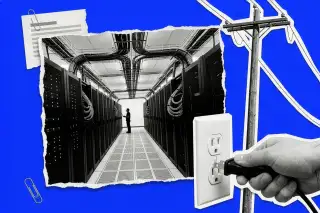
Two projects are underway in Effingham County, Georgia, a midsize county about 30 miles from Savannah: Project Camellia, a planned $20 billion OpenAI data center, and Project Zero, the county's vision to eliminate property taxes for primary residents entirely.
They are connected. On Tuesday, county commissioners voted 4 to 1 to approve their piece of a plan providing a combined six mills of property tax relief, part of an estimated 40% cut for the average household. Construction of the data center isn't expected to begin until 2028, but the tax break arrives this year, supported by the land sale.
Must Read
Officials are calling it a "defining moment" in the county's history and the largest property tax cut Effingham has ever seen. Under the deal, OpenAI would receive a 50% property tax abatement for 15 years, but it would still become the county's biggest taxpayer, paying hundreds of millions of dollars in total taxes over that period. Additionally, the company has pledged $80 million in community benefits.
Not all residents are celebrating. To a substantial group of Americans, AI data centers are the pinnacle of what's wrong with the world: loud, annoying, environment-harming server farms powering a technology they fear will take jobs while enriching billion-dollar companies to produce soulless "slop." Sen. Raphael Warnock, a Georgia Democrat, has said locals have "serious concerns" about the Effingham project, including but not limited to "higher utility costs and more water, light, and noise pollution."
This conversation is happening across the country. Even President Donald Trump has weighed in, pushing localities to accept data centers on the basis they'll provide an economic windfall.
"The only reason that communities throughout the U.S.A. should not want Data Centers is if they want to end up being backwards and poor. If they want to be successful and rich, with far lower taxes and jobs all over the place, let Data Reign," he wrote Monday on Truth Social.
There isn't a succinct, nationally applicable answer to the question of whether a data center helps or hurts consumers' wallets. Instead, it's situational, hinging upon what's negotiated in individual deals between local governments and tech companies — and how much tax revenue these projects actually generate after all the deal-sweetening exemptions are factored in.
Here's what we know so far.
Must Read
Data centers have become a hard sell
The evidence is growing that data centers are unpopular. OpenAI CEO Sam Altman himself has admitted as much, telling TIME in August that, "clearly, people hate data centers." Communities are organizing to block these projects and roll back tax incentives, leading to protests and town halls packed with angry neighbors.
Faced with blowback, some state officials are pivoting, too. For example, Ohio and Illinois have recently both announced pauses on state tax incentives for new data center projects.
Illinois Gov. J.B. Pritzker, a Democrat, approved sizable tax incentives for data centers in 2019, describing the facilities "as critical a part of our infrastructure as our roads, trains and schools." At the time, he predicted the centers would bring economic growth and a surge of union jobs.
Now, he's suspended those incentives until the state has a better framework that "protects affordability" and "safeguards our natural resources," per a news release.
Ohio Republican Sen. Jon Husted, then the state's lieutenant governor, attended data center groundbreakings in 2019 and praised Meta's data center investments in the state in 2022, when Ohio was courting data centers by dangling tax exemptions. Those exemptions have since been paused, and Husted is now working to rein the industry in, introducing a bill earlier this summer aimed at shielding consumers from higher energy bills.
Nationally, polls show that about 70% of Americans oppose construction of data centers in their area. Just some of the concerns are financial, but they're still notable. Gallup found that 15% of respondents worry about higher electric costs as data centers strain electric grids.
The property tax cut promise of data centers
Developers argue that the property taxes paid by data centers can be a game changer for communities, making the many tradeoffs worthwhile. Indeed, a handful of early recruiters have shown it's possible to deliver relief to homeowners using tax revenue from data center projects.
Loudoun County, Virginia, the "data center capital of the world," has reduced property taxes by roughly 30% over the past decade. Tax dollars from roughly 250 data centers in the county have also funded new schools, public safety investments, roads and bridges and a $102 million recreation center.
Data centers are capital-intensive operations, and their land, structures and equipment are all taxable, explains Jared Walczak, president of Walczak Policy Consulting and a senior fellow at the Tax Foundation. The last piece is crucial, as data center equipment such as servers and chillers tends to generate a big property tax bill.
"The issue comes down often to whether a data center is paying those property taxes or if it's been abated," Walczak says. "Some communities, especially a decade or so ago, were trying very hard to attract data centers, so they often abated much of the property tax burden. These days, that's much less likely to happen."
In DeKalb, Illinois, the city has claimed homeowners would pay double what they currently do in property taxes were it not for Meta’s 500-acre data center campus, completed in 2024. Walczak also brings up Quincy, Washington, a rural town where property taxes have been slashed by about 70% over two decades, mostly because of data centers.
"They've been able to build new water treatment facilities, new schools, new police and fire department, new city hall — because of this enormous fiscal surplus," he says.
Opponents argue that states are losing hundreds of millions or even billions of dollars in revenue because of sales tax exemptions. An April report from the National Conference of State Legislatures found that at least 38 states exempt data center equipment from sales tax.
However, Walczak says that's to be expected, because sales taxes are usually designed to land on final products. The exemptions for data centers do not represent special treatment, he says, as manufacturing and agricultural equipment are likewise exempt.
"They're asking this counterfactual of what if we put equipment in the sales tax base just for data centers — how much more revenue would we raise? But sales taxes don't fall on equipment. That's just the standard rule," Walczak says.
The catch: Tax exemptions negate benefits
The same few places come up again and again in coverage of data centers' financial impact, and that's because there simply aren't that many cases yet in which major property tax relief has materialized for residents.
One complicating factor is that funding a meaningful property tax cut requires a project large enough to move an entire town or county's budget. Massive AI projects in rural areas can do that, and so can a concentration of projects in a populous county like Loudoun. But projects that are smaller relative to a place's population may only have impact at the margins.
The catch is that governments usually have to offer huge tax incentives to land these projects in the first place. That chips away at the primary benefit of data centers. Exemptions eventually sunset, but some are set to last for as long as 40 years. (More commonly, they run 10 to 15 years.)
Critics blast these tax abatement deals as handouts to already rich tech companies.
"Unfortunately, because so many local policymakers have been fooled into believing that data centers, in and of themselves, constitute economic development, they've actually been willing in many cases to waive ... the one conduit through which data centers might actually inject income into those communities," says Sean O'Leary, a senior researcher focused on energy at the Ohio River Valley Institute.
Attracting data center development is a game of offering tax breaks, bidding against other governments' proposals in anticipation of jobs — of which they later learn "there really aren't very many," he adds.
Job gains are mainly temporary because data centers do not require much human labor after they're built.
"For the time that the data center is under construction and perhaps thousands of workers are needed, then the economy looks really, really good. But once construction ends, then it reverts back," O'Leary says. "Everybody then goes home, and the community is left no better off than it was before, except perhaps for some taxes."
'We can't give away something we never had'
Hermiston, Oregon, which will soon have three Amazon Web Services hyperscale data centers in its area, is now collecting millions of dollars per year from Amazon. The money funded a rebuild of Hermiston's city hall for $10 million after a fire, among other projects, Assistant City Manager Mark Morgan says.
"Just the amount that Amazon paid in taxes and fees in lieu of taxes last year was more than our top 12 other property taxpayers combined," he says.
By his math, the projects have created over 1,000 long-term jobs in the information sector, which is significant in a county with roughly 30,000 workers. Data points like this lead Morgan to push back against critics who talk about revenue "foregone" through data center tax exemptions.
"I essentially write that off entirely because we can't give away something we never had in the first place," he adds.
In 2019, Hermiston gave Amazon a 15-year deal under which the company pays fees in lieu of property taxes. The landscape has shifted over the past couple of years: Record data center spending has led to a scarcity of available prospective sites, making sites more valuable and giving governments more leverage, Morgan says.
Today, the city might be able to offer less for a similar project. But Morgan has no regrets. After all, the exemption is the reason Amazon chose Hermiston, he says.
Morgan says he still thinks about two other projects that the city competed for earlier in his career and lost to Pasco, Washington, about 35 miles to the north: an AutoZone distribution and logistics warehouse operation and a Darigold whey protein factory. Hermiston had offered tax exemptions to both.
Losing these bids came with a real cost just like the Amazon deal came with real benefits. While Hermiston hasn't cut property taxes for residents, it's been able to catch up on deferred capital needs like renovating its library ($3 million) and expanding the public safety center for its police and fire departments ($5 million).
"If not for these dollars, I'm not sure where those dollars would have come from," Morgan says.