
Kevin Warsh Is the New Head of the Fed. Here's Why This Matters for Your Money

- 'An Endless Spiral': Why People in Debt Often Can't Stop Spending Money
- Best Student Loan Refinance Companies of May 2026
- Is Debt Settlement a Good Idea?
- Who Doesn't Have to File Taxes This Year? Details for Retirees, Students and Gig Workers
- Pell Grants Will Soon Help Students Pay for Job Training Programs
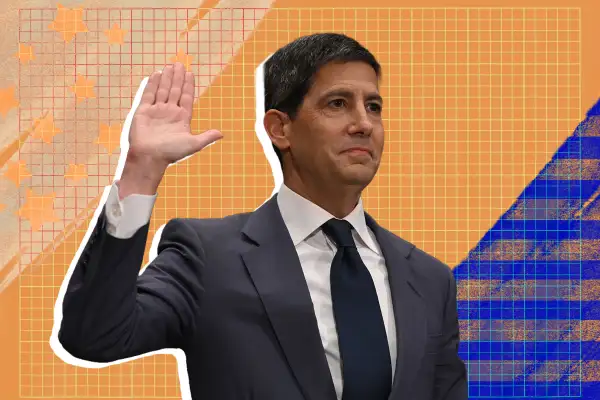
The Federal Reserve is about to welcome a new chair for the first time in eight years as Kevin Warsh takes the reins from Jerome Powell. And while what's happening in Washington may feel far away from your everyday financial life, it's a change worth paying attention to.
"Does the average investor [or] consumer need to care about what's happening at the Fed?" says David Busch, chief investment officer at Trajan Wealth. "Absolutely."
Must Read
That's because Warsh is taking the helm of the central bank at a particularly interesting time in Fed history. The bank is charged with a dual mandate — to keep unemployment low and prices stable — and because of the Iran war and the White House's tariff policies, inflation is running hotter than the Fed likes.
As of March, the inflation measure the Fed tracks was up 3.2% year-over-year. The Fed's long-run target is 2%, which makes it all but certain that Warsh's first moves as chair will be focused on slowing price increases.
The primary tool the Fed has to achieve its goals is the federal funds rate, or the interest rate banks pay when they lend each other money overnight. The 12-person Federal Open Market Committee votes throughout the year whether to increase or decrease the rate's target range. Although Warsh will lead that committee, his vote will count the same as the other members'.
"Warsh can't come in and unilaterally, on his own, make rate decisions," Busch adds.
Loretta Mester, an adjunct professor of finance at the Wharton School of the University of Pennsylvania, points out that just the chair is changing — not the makeup of the whole group. In fact, Powell himself has vowed to serve out the rest of his term (which doesn't end until 2028) as a member of the committee.
Where People Are Investing Right Now
This helps with continuity. Even if Warsh changes up some of the Fed's processes, like how often it gives press conferences and which inflation metric it prefers, its core responsibilities will remain the same.
What's notable, however, is that the U.S. is in the middle of a massive debate over how politically independent the central bank should be. Since taking office for his second term, President Donald Trump has applied increasing pressure on Powell to bring down interest rates, a campaign that has involved his administration investigating Powell, publicly calling him a "numbskull" and admitting to wanting to "fire his ass."
When the federal funds rate is high, borrowing is expensive: Credit card APRs rise, new auto and personal loans cost more, and people tend to spend less. When it's low, debt becomes cheaper to carry, so people are encouraged to spend.
Lawmakers often push for low interest rates because of their ripple effect throughout the economy. In that way, Trump's timing makes sense: He likely wants the Fed to slash rates so voters feel good financially going into the midterm elections.
However, Mester, who was president of the Federal Reserve Bank of Cleveland from 2014 to 2024, says this could lead to higher inflation later on. Research has shown, too, that mixing monetary policy and politics ultimately results in worse outcomes for the public.
So keeping an eye on Warsh — particularly, what agenda he sets for the Federal Open Market Committee and how he interacts with the president — is a smart idea.
"Everyone should be wanting the Fed to be able to make its policy decisions independent of political influence," Mester says. "Everyone should care that the Fed does its job."