
No Real ID? The TSA Will Now Charge You $45 to Fly

- I Earn $130,000 but Am Terrified of Layoffs. Should I Stop Funding My 401(k) to Pay off My Mortgage?
- Homeowners in These 15 Counties Pay the Lowest Property Taxes in the U.S.
- New USPS Fuel Surcharge Will Make Mailing Packages More Expensive Through 2027
- Lawmakers Scramble to Suspend Gas Taxes as Prices Near $4 a Gallon
- More Americans Than Ever Are Relying on Personal Loans. Here's What You Need to Know
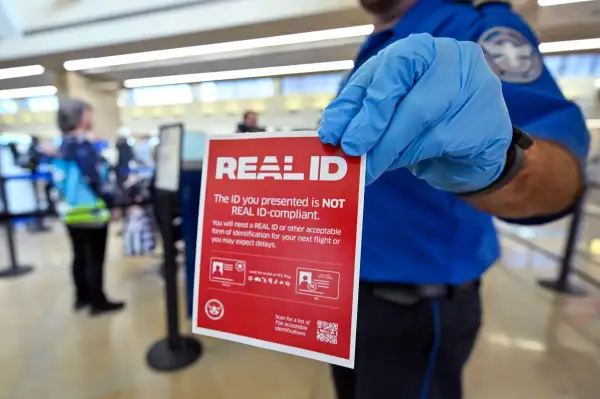
As of Feb. 1, travelers who show up at the airport without a Real ID could be forced to pay $45 to fly under a new enforcement policy from the Transportation Security Administration, or TSA.
Officials say the rules aim to ensure all passengers are traveling with their own, valid identification. According to the TSA, passengers lacking satisfactory identification will "pay a $45 fee to use a modernized alternative identity verification system" called TSA ConfirmID.
TSA ConfirmID is designed to help travelers without a Real ID get through security. It's expected to take an average of 10 to 15 minutes to verify an identity through ConfirmID, though the TSA acknowledges the process could stretch up to 30 minutes.

Passengers are advised to complete the TSA ConfirmID process before arriving at the airport to reduce delays. You can access the form and payment portal at a Pay.gov link that is also pinned on the TSA.gov website. Upon paying the fee, users should print or screenshot the receipt, according to Jessica Mayle, a TSA regional spokesperson.
"The receipt is what they want to see at the checkpoint to prove that you've made the payment," she told reporters last week at Minneapolis-St. Paul International Airport. "You cannot pay in cash or card at the checkpoint. We have no way of processing payment here."
Travelers who have not completed the online process will be given a paper with a QR code for the TSA ConfirmID system. The brief form can be completed on a phone or computer at the airport, but passengers will have to leave the security line to pay, according to a TSA FAQ page.
What is the TSA’s new $45 Real ID fee?
The REAL ID Act of 2005 created an additional layer of identity verification for domestic travelers. However, prolonged delays pushed back airport enforcement by many years. At one point, the TSA was supposed to start requiring Real IDs in 2018, but that timeline was abandoned.
The deadline to have a Real ID at TSA checkpoints finally arrived last May. Until this week, passengers without Real IDs had been able to board flights at no cost; they had just been advised to budget extra time to get through security.
Passengers without a Real ID or a valid alternative option must now pay the fee and use the revamped TSA ConfirmID system at airport security checkpoints. TSA ConfirmID is valid for 10 days.
Officials said that 94% of passengers were already using a Real ID or another compliant identification, such as a passport. But that still leaves hundreds of thousands of passengers each week who have been traveling without a Real ID — and who will now be subject to the new fee if they don't act before their next flight.
The fee is meant to cover the full cost of the program, with five-year revenue projected at $476 million.
"There are costs associated with verifying the identity of these people who aren't bringing Real ID or another acceptable form of ID, and we want those costs to be borne by the people who are using the services, and not other taxpayers," Mayle said.
All state motor vehicle departments have offered Real ID driver's licenses or compliant alternatives for years. Showing a driver's license will continue to be the easiest method for many passengers to prove their identity, while U.S. passports and foreign passports remain acceptable forms of ID for domestic flights.
The TSA will also continue to accept these alternative forms of identification:
- State-issued enhanced driver’s license (EDL) or enhanced ID (EID)
- DHS trusted traveler cards (Global Entry, NEXUS, SENTRI, FAST)
- U.S. Department of Defense ID, including IDs issued to dependents
- Permanent resident card
- Border crossing card
- A photo ID issued by a federally recognized Tribal Nation/Indian Tribe, including Enhanced Tribal Cards (ETCs)
- HSPD-12 PIV card
- Foreign government-issued passport
- Canadian provincial driver's license or Indian and Northern Affairs Canada card
- Transportation worker identification credential
- U.S. Citizenship and Immigration Services Employment Authorization Card (I-766)
- U.S. Merchant Mariner Credential
- Veteran Health Identification Card (VHIC)
Can you still fly without a Real ID?
The TSA is urging travelers without a Real ID to make appointments to get one through their local motor vehicle department. Upgrading to a Real ID often requires additional documents and in-person appointments.
While consumer advocates are calling the new rules burdensome, officials argue that the changes are necessary to keep the traveling public safe. In a statement announcing the rule, Adam Stahl, the TSA's acting deputy administrator, said strict identity verification keeps "terrorists, criminals and illegal aliens out of the skies."
Quote, compare, and buy in minutes—best price guaranteed

🏖️ Best Price Guarantee - Buy Online!
- Coverage for Non-Refundable Trip Costs
- Missed Port & Connection Protection
- Emergency Medical & Dental Care at Sea
- Baggage Loss, Theft & Delay Protection
Travel concierge services with premium plans

Get an Instant Quote from AIG Travel Guard
-
Domestic, Road Trips & Weekend Travel Coverage
- Coverage for International Trips
- Cruises, Family Travel, Seniors
- 24/7 Emergency Assistance
Cancel-For-Any-Reason Coverage Options

✈️ Quote & Compare Best Travel Insurance
- Same Price as Purchasing Directly from the Providers
- Trip Cancellation, Medical & Cancel for Any Reason Policies
- Cruise Insurance, Group Travel & Annual Policies
Fast Claims & 24/7 Travel Support

"Cancel For Any Reason” (CFAR) availability
- Access to a Network of 20K Telemedicine Doctors in 21 Languages
- Includes trip cancellation, baggage delay/loss, and flight delays
- Emergency medical expenses coverage are included in the coverage
Quick quote — no payment details or email required

Trusted by Over 6 Million Travelers Annually
- Medical & Dental Emergencies
- Trip Delays, Interruptions & Cancellations
- Coverage for Baggage & Personal Items
- 24/7 Travel Assistance
More from Money:
Best Travel Credit Cards of 2025
Time Is Running Out to Get a Real ID. Here's Everything You Need to Know
Travel Rewards Are Now an ‘Essential’ Part of Americans’ Vacation Budgets